Per-second list prices for current AI video models span roughly 19 times, and the same model can cost very different amounts depending on the provider. This article normalises published specs and prices for eleven models to dollars per second at 1080p or the nearest tier; it does not measure output quality or how many attempts a usable shot takes.
Method. Model makers' API docs and pricing pages, fal.ai listings and Hugging Face model cards checked November 18, 2026, with Google's Veo 3.1 Fast price and the chart's prices re-checked 19 November 2026; each price names its source. Vinc makes an AI film studio and did not fund or co-author any of the sources.
What changed in 2026, before any prices
OpenAI Sora is gone. OpenAI's Sora 2 Pro page says the Sora 2 models and the Videos API were shut down on 24 September 2026, with no one-to-one replacement API. The Decoder reported the web and mobile apps closed on 26 April 2026. (The last listed sora-2-pro price at 1920×1080 was $0.70 per second.)
Veo moved off the Gemini API. Google's video generation docs say the Veo 3.1 Preview models there were shut down on 22 October 2026, pointing developers to Gemini Omni Flash or GA Veo 3.1 on the Gemini Enterprise Agent Platform, which lists veo-3.1-generate-001 with a retirement date of "May 4, 2027 or later".
Version numbers moved. Kling is on 4.0, Seedance 2.5, MiniMax H3 (also marketed as Hailuo 3), LTX-2.5, Runway Gen-4.5 and Aleph 2.0, Luma Ray 3.2. Comparisons quoting Kling 2.x or Hailuo 02 prices are quoting legacy tiers.
How we normalised the numbers
Video APIs bill per second, per clip, per token or in credits. To put them on one axis:
US dollars per second of output, from the model maker's own API where it prices in dollars (Google, LTX, MiniMax, Runway, Pika), otherwise from
1080p or the nearest tier. Gen-4.5 tops out at 720p and MiniMax H3 at 2K; those bars are labelled.
Audio on where optional, with the silent price noted when published.
List price, ignoring time-limited discounts.
Token and credit prices were converted only where the page gives the conversion: Google states Gemini Omni 1.2 Flash bills about 8,688 output tokens per second of upscaled 1080p at $12 per million tokens. Luma publishes no dollar value per Ray 3.2 credit, so it has no bar.
The specs table
All prices are as listed on 18 November 2026 and re-checked on 19 Nov 2026.
Model
Max length per generation
Max output
Frame rate
Native audio
Image-to-video
$/s at 1080p or nearest (source)
Weights
Google Veo 3.1
8 s (4, 6 or 8)
4K
24 fps
Yes
Yes, plus first/last frame
$0.40 with audio, $0.20 without (fal)
Closed
Google Veo 3.1 Fast
8 s
1080p (Google docs)
24 fps
Yes
Yes
$0.12 with audio, $0.10 without (Google Cloud)
Closed
Gemini Omni 1.2 Flash
15 s, extendable to 30 s
4K (1080p and 4K are upscaled)
Not stated
Yes
Yes, up to 6 reference images
about $0.104 (Google)
Closed
Kling 4.0
30 s (3–30)
1080p
Not stated
Yes, stereo with lip sync
Yes, start and end frames
$0.235 (fal)
Closed
Kling 3.0 Pro
15 s (3–15)
1080p (4K on separate endpoints)
Not stated
Yes
Yes
$0.168 with audio, $0.112 without (fal)
Closed
Seedance 2.5
30 s
1080p on fal
Not stated
Yes
Yes (separate endpoint)
about $1.164 (fal)
Closed
MiniMax H3 (Hailuo 3)
15 s
2K
24 fps
Yes, 32 kHz stereo
Yes, first/last frame
$0.13 at 2K, $0.08 at 768p (MiniMax)
Open weights, 768p base
LTX-2.5 Fast
20 s at 720p/1080p, 24–25 fps
4K
24, 25, 48, 50 fps
Yes
Yes
$0.13 (LTX)
Open weights
LTX-2.5 Pro
10 s
4K
24, 25, 48, 50 fps
Yes
Yes
$0.17 (LTX)
Open weights
Runway Gen-4.5
10 s (2–10)
720p
Not stated
Not stated
Yes
$0.12 at 720p (Runway)
Closed
Pika 2.5
10 s (5 or 10)
1080p
Not stated
Not stated
Yes (separate endpoint)
$0.06, or $0.09 for 5 s clips (Pika)
Closed
Luma Ray 3.2
10 s (5 or 10)
1080p, HDR and EXR at 5 s
Not stated
Not stated
Yes
No public $ value per credit
Closed
"Not stated" means the pages we opened don't give the value, not that the feature is missing. Each row's spec and price pages are listed under Sources. Two cross-checks: Runway's API pricing lists Veo 3.1 at 40 credits per second with audio, which at $0.01 per credit matches fal's $0.40; and fal's Veo extend endpoint adds up to 7 seconds per step, for up to 20 steps.
Google Flow
Runway
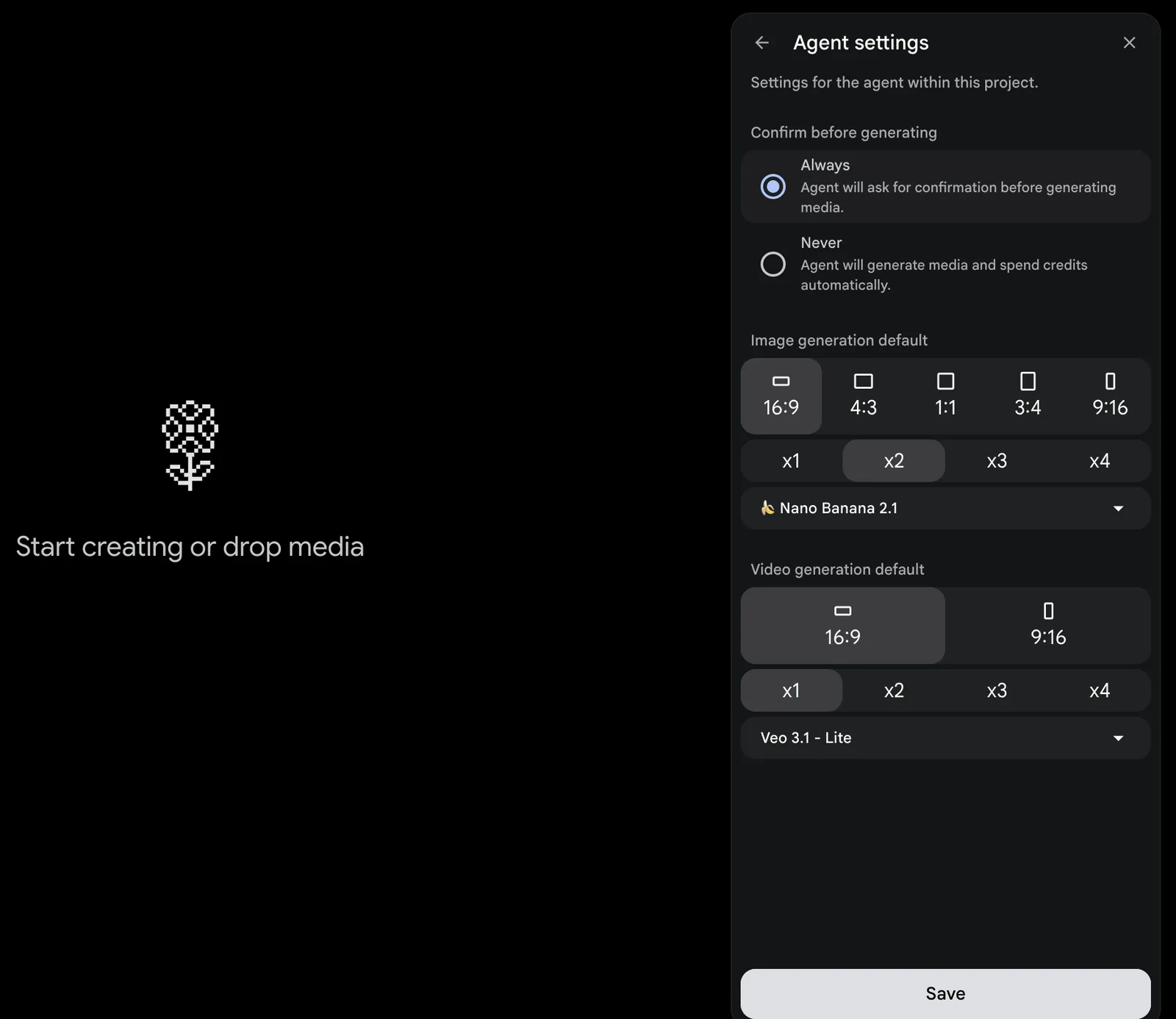
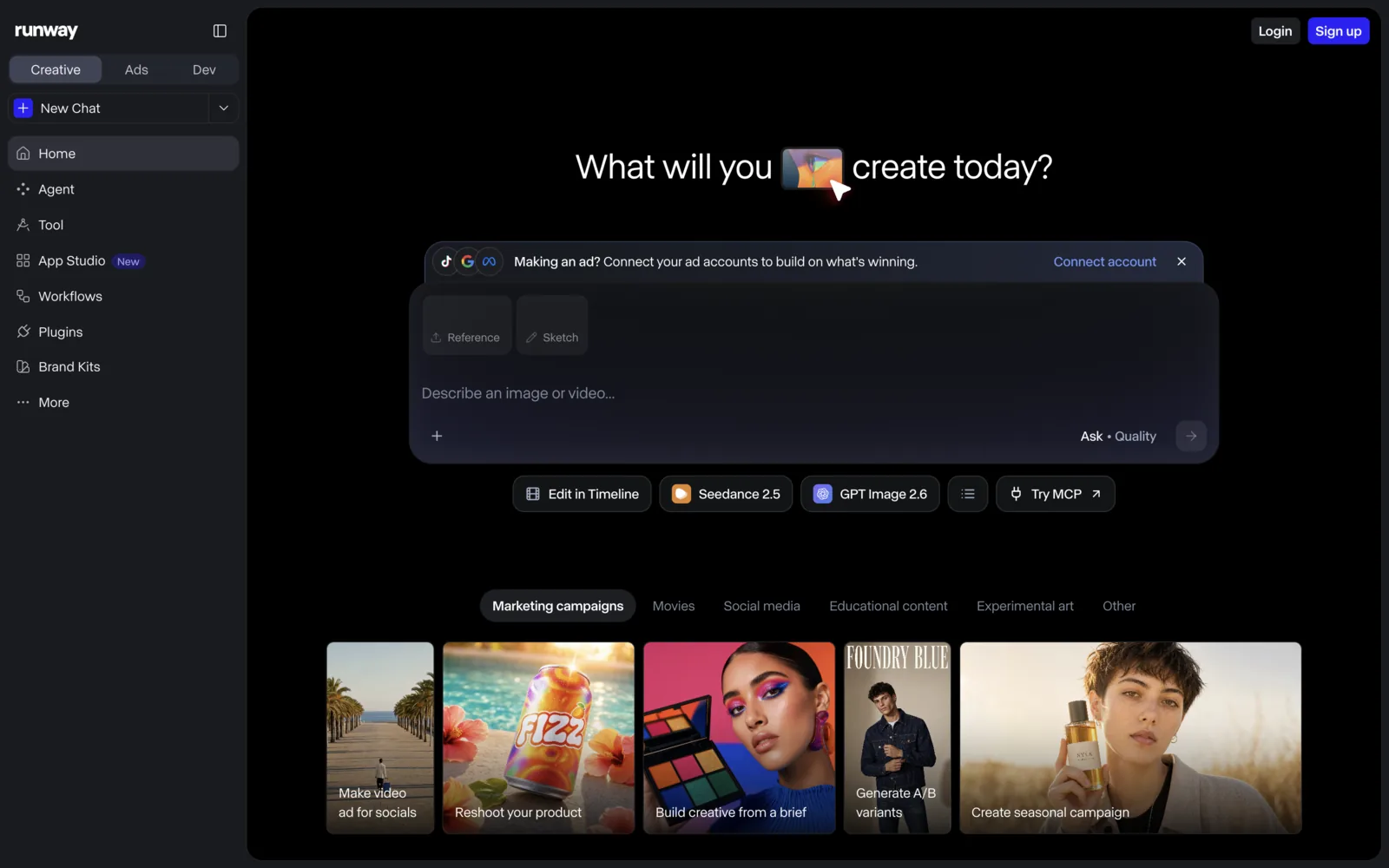
Two apps where several of these models run: Google Flow (Veo 3.1 and Omni), shown as a new, empty project with its default model settings open, and Runway's generation home (Gen-4.5 alongside third-party models).Screenshot by Vinc of Flow; screenshot by Vinc of Runway's web app while signed out. Both 18 Nov 2026.
Price per second, side by side
List price per second of video, 1080p or nearest tier
Seedance 2.5 (fal)$1.164
Veo 3.1 (fal)$0.400
Kling 4.0 (fal)$0.235
LTX-2.5 Pro$0.170
Kling 3.0 Pro (fal)$0.168
LTX-2.5 Fast$0.130
MiniMax H3, 2K$0.130
Veo 3.1 Fast$0.120
Runway Gen-4.5, 720p$0.120
Gemini Omni 1.2 Flash$0.104
Pika 2.5$0.060
As listed 18 Nov 2026, re-checked 19 Nov 2026. Audio on where it is an option. Source per bar: Google (Omni, Veo 3.1 Fast), LTX, MiniMax, Runway and Pika own APIs; Veo 3.1, Kling and Seedance from fal.ai. Gen-4.5 is 720p, MiniMax H3 is 2K, Omni 1080p is upscaled.
The spread is about 19×, from $0.06 to $1.164 per second. A 10-second 1080p clip with audio works out to $11.64 on Seedance 2.5 via fal, $4.00 on Veo 3.1, $2.35 on Kling 4.0, $1.30 on LTX-2.5 Fast, and about $1.04 on Gemini Omni 1.2 Flash. These are our arithmetic from list prices, for single attempts; real shots usually take several.
fal also lists a 4K tier at $0.16 that MiniMax doesn't
So price the exact endpoint, resolution and audio setting on the provider you'll actually call.
Studios that bundle these models, ours included, charge in their own credits. Vinc (us) runs several of them in one project and bills credits per generation (Vinc pricing): by our price table, Veo 3.1 Fast costs 18 credits a second with audio (12 without) and Kling 3.0 Pro about 20 with audio. Credits cost $10 per 1,000 on Starter, less on Creator ($50 for 5,500) and Studio ($100 for 12,000), and unused paid credits roll over.
Length, resolution and frame rate decide more than price
Clip length. Kling 4.0 and Seedance 2.5 generate up to 30 seconds in one pass. Veo 3.1 stops at 8 seconds, so longer shots depend on extension; Gemini Omni 1.2 Flash generates 15 and extends to 30.
Native resolution versus upscaling. Google labels Omni's 1080p and 4K as upscaled, and Gen-4.5 generates at 720p. For 4K delivery, only Veo 3.1 (standard tier) and LTX-2.5 list unlabelled 4K; LTX-2.5 Pro at 4K costs $0.39 per second (LTX pricing).
Frame rate. Only Veo 3.1 (24 fps), MiniMax H3 (24 fps) and LTX-2.5 (24, 25, 48 or 50 fps) publish one. LTX alone offers 25 and 50 fps for PAL broadcast; on LTX-2.5 Fast, 48 or 50 fps cuts maximum length from 20 to 10 seconds.
Aspect ratio. Veo 3.1 and Gemini Omni list only 16:9 and 9:16. LTX-2.5 adds 1:1, 3:2 and 2:3; the MiniMax H3 card lists 21:9 among others.
Longest clip in one generation (seconds)
Kling 4.030 s
Seedance 2.530 s
Gemini Omni 1.2 Flash15 s
Veo 3.18 s
As listed on each vendor's model page, checked 19 Nov 2026 (see the specs table). Gemini Omni 1.2 Flash extends to 30 s in total; Veo 3.1 relies on extension beyond 8 s.
The output shapes in the aspect-ratio point, at equal height: 16:9 and 9:16 (the only two Veo 3.1 and Gemini Omni list), plus 1:1, 3:2 and 2:3 (LTX-2.5) and 21:9 (MiniMax H3).
Licences and open weights
LTX-2.5 (open weights) is under the LTX-2.x Community License Agreement. Per its Hugging Face page, commercial use is free under $10M annual revenue, counted across subsidiaries and affiliates; above that you need a paid agreement.
MiniMax H3 publishes 33B-parameter weights under the MiniMax H3 Community License Agreement (model card). The open release generates at a 768-pixel short side; the 2K regeneration model isn't open. We didn't find commercial terms on the card itself.
Everything else is closed, used through an API under the provider's terms. fal tags its endpoints "Commercial use" and its Veo 3.1 page allows commercial use subject to fal's terms. Google says all Gemini Omni output carries a SynthID watermark (Omni docs).
For client work, read the terms of the provider you actually call, not the model maker's marketing page.
How we compiled this
Every figure comes from model makers' API docs and pricing pages, fal.ai model pages, Hugging Face cards and ByteDance Seed's launch post, opened on 18 November 2026 (Sora's app dates rely on The Decoder). We left out Sora (shut down), Veo 3.1 Lite (Preview, with its own page conflicting on image input) and reseller blogs, whose figures often disagreed with providers' pages. We didn't measure quality or acceptance rate: a cheaper model that needs four attempts per usable shot can cost more than an expensive one that needs one.
AI Music for Film: Suno, Udio and Other Generators on Licences, Ownership, Lawsuits and Cue Sheets
Whether an AI-generated track can go in your film depends on the plan you made it on, whether the terms exclude film and TV, and whether anyone can own it at all. This guide compares the published terms of Suno, Udio, ElevenLabs Music, Stable Audio and AIVA, sets out the label lawsuits as reported, and explains what US copyright law and North American PRO rules mean for your cue sheet.