AI voice tools can narrate, clone and dub a film for a few dollars a minute, but the licence and consent rules decide what you can actually release. This guide compares ElevenLabs, HeyGen, Rask AI, Descript and others on published prices and terms, and sets out what SAG-AFTRA, Equity and recent US state laws require.
Method. Vendor pricing, documentation and legal pages, SAG-AFTRA contract bulletins and 2026 agreement summary, Equity's AI toolkit and official government pages, all checked November 18, 2026. Vinc makes an AI film studio and did not fund or co-author any of the sources.
The short version
AI voice tools cover three indie-film jobs: narration from text, cloning a voice you have permission to use, and dubbing a finished cut. Prices were checked on vendor pages on 19 November 2026. The licence and consent rules matter more than the price:
ElevenLabs' free plan is non-commercial. Its terms (last updated 9 October 2026) say free users "may only use the Services for non-commercial purposes", and free-tier dubs are watermarked.
Cloning someone else's voice needs their consent. An ElevenLabs Professional Voice Clone can only be made by the voice's owner, who then shares it with you.
Union dubbing rules are changing. Under the 2026 SAG-AFTRA TV/Theatrical Agreement, dubbing a performer's digital replica into another language needs their consent on pictures starting principal photography on or after 1 July 2027.
The tools, side by side
US dollars, monthly billing. "Languages" is the vendor's published count, not tested coverage.
Tool
Entry plan
Covers
Languages
Cloning consent
Commercial use
ElevenLabs
Starter, $6 (30,000 credits)
TTS, cloning, dubbing
74; Dubbing v2 lists 94
You confirm "the right and consent"; Professional clones verified by voice
"through a clear affirmative action" at avatar creation
Not stated; free videos watermarked
Rask AI
Creator, $39 (25 minutes)
Video translation, dubbing
"over 135 languages"; cloning into 57
Not stated
Not stated
Descript
Hobbyist / Creator / Business
Editing, TTS, clones, dubbing
Dubbing into 30
Not stated
Not stated
Respeecher
Not published
Speech-to-speech
Not published
"a mutually signed agreement"
By agreement
Deepdub
Sales only
TTS, speech-to-speech, dubbing
"100+ languages and accents"
Not stated
"All voices are licensed for any usage"
Entry paid plan, monthly billing (USD)
ElevenLabs Starter$6
HeyGen Creator$29
Rask AI Creator$39
Vendor pricing pages, checked 19 November 2026. ElevenLabs Starter was $1 for the first month under a promotion; $6 is the ongoing price. Plans include different allowances (credits vs minutes), so this compares the cost of entry, not the cost per minute.
ElevenLabs
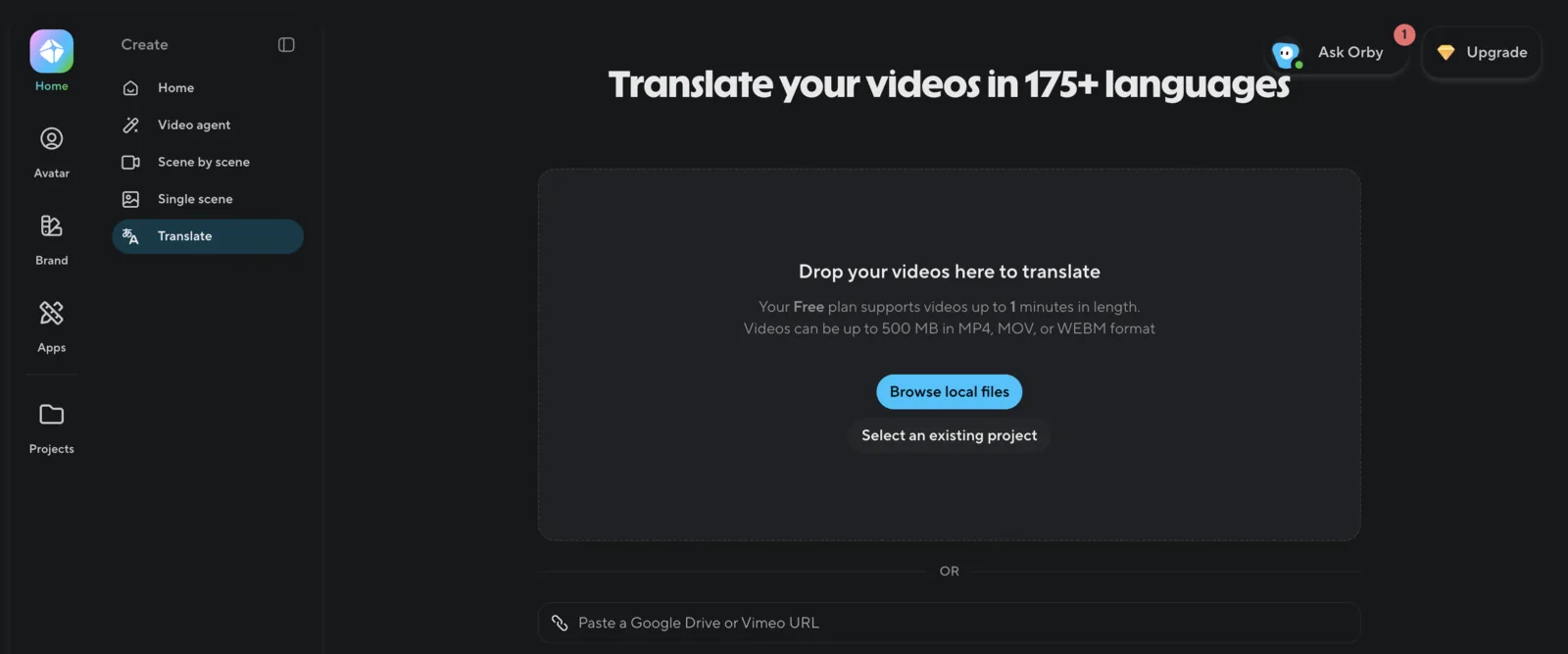
HeyGen
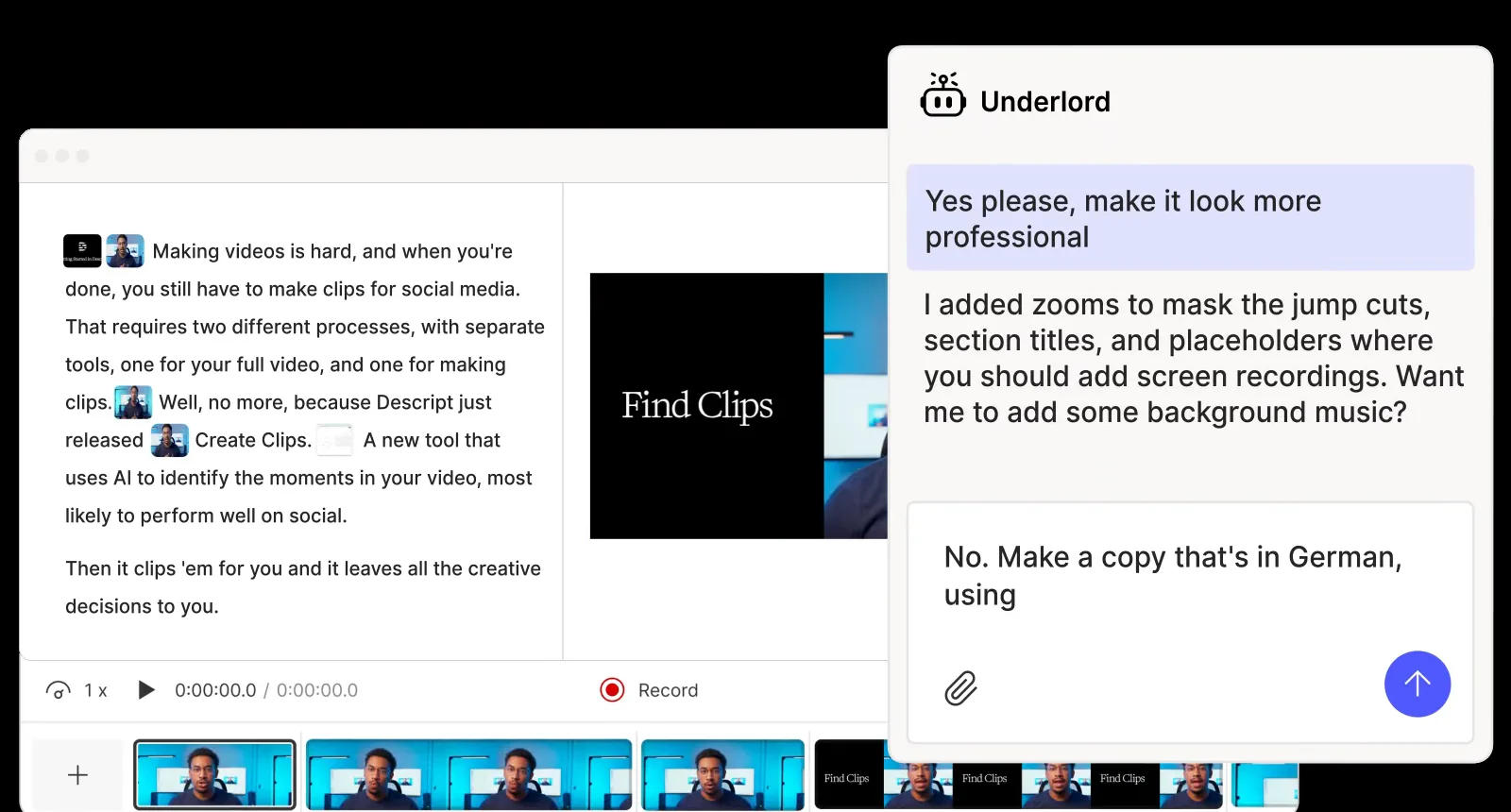
Descript
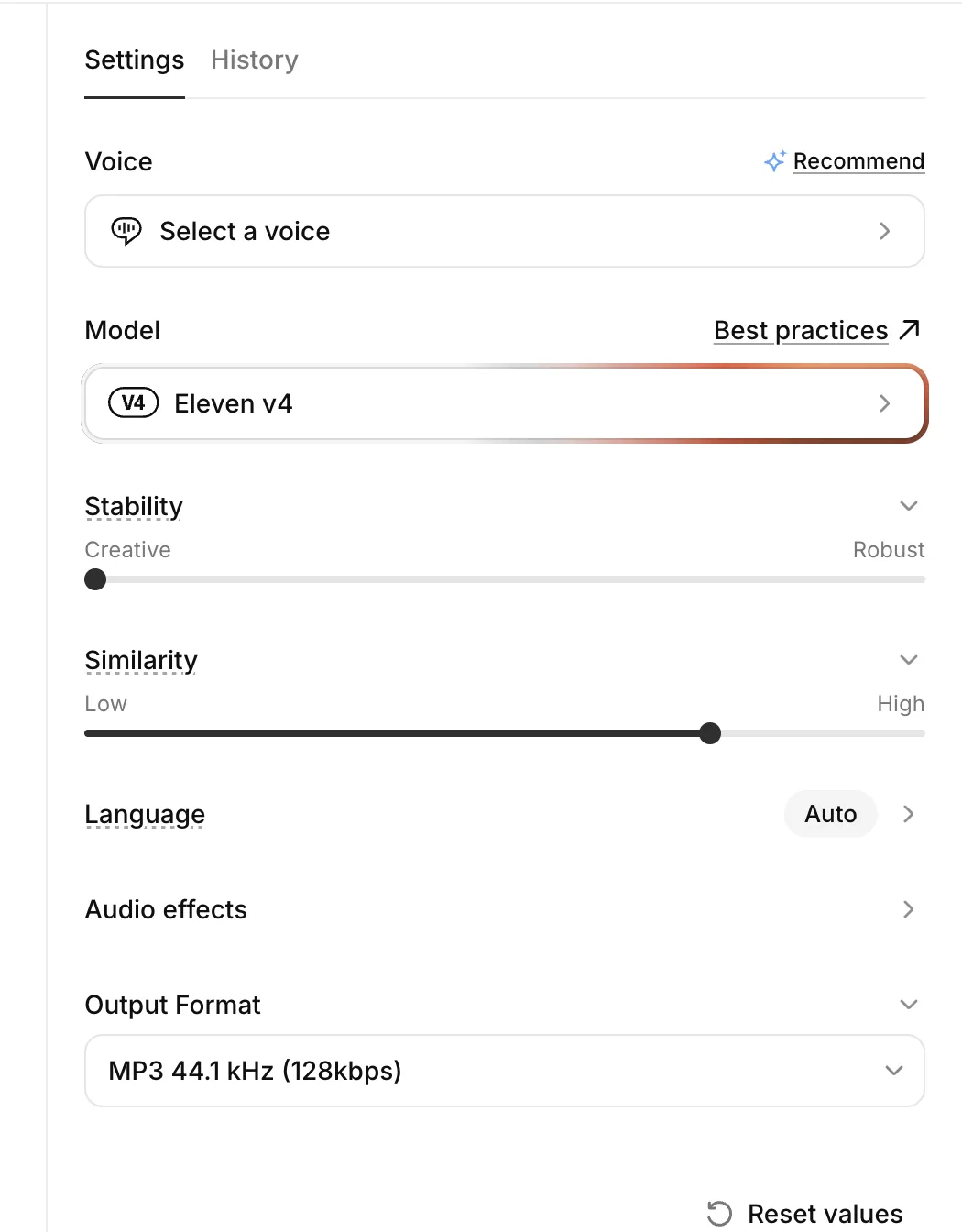
ElevenLabs' text-to-speech settings, HeyGen's video translation screen and Descript's transcript editor. Rask AI, Respeecher and Deepdub aren't shown: they sell through sales teams, and we found no first-party screenshot of their working screens.Screenshots by Vinc of ElevenLabs and HeyGen; screenshot of Descript's product page. All 18 Nov 2026.
ElevenLabs in detail
Plans
ElevenLabs sells monthly plans priced in credits, with a commercial licence from Starter upwards.
Plan
Price
Credits
Pro clone slots
Free
$0
10,000
None
Starter
$6
30,000
None
Creator
$22
121,000
1
Pro
$99
600,000
1
Scale
$299
1,800,000
3
Business
$990
6,000,000
10
Under section 4(c)(ii) of the terms, "as between you and ElevenLabs, you retain all rights in and to your Output". But section 10 says the service "may produce the same or similar Output for you and a third party", which matters if you plan to enforce rights in a voice performance.
Pay-as-you-go API prices
The API bills speech per 1,000 characters and dubbing per minute; it lists no separate cloning fee.
Service
Price
TTS, Eleven v4 / v3 / Multilingual v2
$0.08 per 1,000 characters
TTS, v4 Turbo / v3 Conversational / Flash
$0.04 per 1,000 characters
Dubbing v1, with watermark
$0.33 per minute
Dubbing v1 without watermark, or Dubbing Studio
$0.50 per minute
Dubbing v2
$2.20 per minute
Models and languages
Language support depends on the model: Eleven v4 lists "90+", Eleven v3 "70+", Multilingual v2 29 and Flash v2.5 32. Check the model you'll use, not the plan page's figure of 74.
Dubbing
ElevenLabs Dubbing v2 covers 94 languages, including regional variants such as en-GB, fr-CA, es-MX and pt-BR. Its limits:
Length: automatic dubbing takes "Up to 1 GB and 180 minutes in the app, or 3 GB per source file via the API"; Dubbing Studio takes "Up to 1 GB and 45 minutes".
Editing: Dubbing Studio runs on v1 and "is in maintenance mode and receives critical bug fixes only". v2 transcript editing via API is "available on Enterprise plans only".
Output: v1 is mono and v2 is "at most stereo", so you rebuild any 5.1 or M&E mix yourself.
Voice cloning: what you need before you upload
ElevenLabs Instant vs Professional
An Instant clone is built from a minute or two of audio; a Professional clone needs at least 30 minutes and can only be made by the voice's owner.
Instant Voice Cloning
Professional Voice Cloning
Audio needed
"1–2 minutes of good audio"; docs warn against more than 3 minutes
30 minutes minimum, 2–3 hours for best results
Plan
"available on most plans"
Creator ($22) or above
Check
You "confirm that you have the right and consent to clone the voice"
Spoken verification "to confirm that the voice belongs to you"
Someone else's voice
Allowed with right and consent
"Even with their consent, you cannot clone someone else's voice"
So a high-fidelity clone of your lead actor for ADR pickups is made on the actor's own account and shared with the production.
ElevenLabs' prohibited-use rules
ElevenLabs' Prohibited Use Policy (updated 9 October 2026) bans the uses a production could breach by accident:
cloning "the voice, identity, or likeness of any living individual" without "explicit and informed consent" or other valid authorisation
using a deceased person's voice "in a manner that is reasonably likely to cause harm" or that infringes post-mortem rights
submitting "voice recordings of anyone under 18 to create or train a voice model", so no child performer clones, even with a parent's signature
impersonating political candidates or officials without authorisation, or getting around its "Voice CAPTCHA"
What it costs per finished minute
Dubbing, per minute of source video: ElevenLabs Dubbing v2 is $2.20 and v1 without watermark $0.50. Rask AI Creator is $39 for 25 minutes, so $1.56 per included minute (our arithmetic, assuming you use the whole allowance).
Text to speech, per million characters (API list prices):
TTS API list price per 1 million characters (USD)
ElevenLabs v4 / v3$80
Google Instant custom voice$60
ElevenLabs Flash / v4 Turbo$40
OpenAI tts-1-hd$30
Google Chirp 3 HD$30
Google Neural2$16
OpenAI tts-1$15
ElevenLabs API pricing ($0.08 and $0.04 per 1K characters), OpenAI API pricing, Google Cloud Text-to-Speech pricing; all checked 19 November 2026. Excludes token-billed models (gpt-4o-mini-tts, Gemini TTS) and free tiers.
Narration at about 150 words a minute is roughly 900 characters (our working figure), so a narrated minute costs about $0.07 on ElevenLabs v4 and $0.01 on OpenAI tts-1. Retakes, direction, the mix and the actor's fee cost far more than generation.
What the unions have agreed
SAG-AFTRA TV/Theatrical, 2023 terms
The 2023 agreement is still the base layer for AI on union pictures, as SAG-AFTRA's 2024 contract bulletins explain.
Voice counts. "The definitions refer to both voice and likeness, so the same rules would apply to digital voice replicas."
Two kinds of replica. An "employment-based digital replica" is made for your job on a picture; an "independently created digital replica" is made outside it.
Notice and consent. 48 hours' notice before scanning; consent "separately signed or initialed", with "a reasonably specific description" of each use.
Dubbing was the exception, because "Dubbing is already permitted in the Codified Basic Agreement and the Television Agreement."
Synthetic performers. One "must be wholly synthetic and not based on an actual performer", and using one requires notice to the union and "an opportunity to bargain."
SAG-AFTRA TV/Theatrical, 2026 terms
The 2026 agreement, ratified on 4 June 2026 by 91.42% to 8.58%, runs from 1 July 2026 to 30 June 2030. Its AI changes that affect voice work, from the union's 11 May 2026 summary:
Provision
What changed
Dubbing into another language
Performer consent now needed, for pictures starting principal photography on or after 1 July 2027 (none was needed before)
Independently created replicas
Minimum payment at the day performer rate, plus residuals where a natural performer would qualify
"No scan" replicas
A replica made from the picture's own footage still counts as employment-based
Synthetics
Producers agree to "a principle strongly favoring human performances"
AI training licences
Union must be notified if covered performances are licensed to train a commercial generative AI system
For an indie producer, the dubbing change is the one to plan around.
SAG-AFTRA Interactive Media, 2025
The 2025 Interactive Media Agreement covers video games and ended an 11-month strike on 9 July 2025. The union says it includes "consent and disclosure requirements for A.I. digital replica use and the ability for performers to suspend consent for the generation of new material during a strike."
Equity (UK)
Equity is the UK performers' union, and its AI toolkit notes that "There are no UK laws explicitly written to regulate Artificial Intelligence". Its "Don't Sign On Set" guide offers sample clauses limiting voice capture to "one named production" and refusing "data mining and generative AI training". For unscheduled scans on set: "say no and speak to your union".
The laws that apply
Law
Where
What it does
Date
AB 2602
California
Voids replica clauses without "a reasonably specific description of the intended uses" and a lawyer or union for the performer
Signed 17 Sep 2024
AB 1836
California
Bars digital replicas of a deceased person's voice or likeness without the estate's consent, including in film and TV
Signed 17 Sep 2024
ELVIS Act
Tennessee
Adds "voice" to the state's Protection of Personal Rights law
Signed 21 Mar 2024
S.8420-A/A.8887-B
New York
Ads with synthetic performers must disclose it "clearly and conspicuously"
Signed 11 Dec 2025; in effect June 2026
SB 1050
California
Ads with a synthetic performer must carry a clear disclaimer
Signed week of 17 Sep 2026
The two disclosure laws cover advertising, not films themselves.
A working checklist for an indie production
The seven steps of the checklist below, from plan and consent before recording to output checks and logs at delivery.
Use a paid plan for anything you'll distribute.
Get voice consent as its own signed document naming the specific use (for example, English ADR pickups for scene 14 plus Spanish and French dubs). That meets SAG-AFTRA's "reasonably specific description" standard and California AB 2602.
Have the actor set up their own clone.
Don't clone minors' voices.
Get dubbing consent on SAG-AFTRA pictures starting principal photography on or after 1 July 2027.
Budget mix time for surround or M&E versions, since dubs come back at most stereo.
Keep generation logs: account, date and source audio for each render.
Every price, language count and quoted rule comes from vendor, union or government pages opened on 18 November 2026, at list price with monthly billing. "Not stated" means the pricing page doesn't say and we didn't read the full terms; we didn't test voice quality or lip-sync. Vinc makes an AI film studio, and none of the vendors or unions named here funded or reviewed this article.
AI Music for Film: Suno, Udio and Other Generators on Licences, Ownership, Lawsuits and Cue Sheets
Whether an AI-generated track can go in your film depends on the plan you made it on, whether the terms exclude film and TV, and whether anyone can own it at all. This guide compares the published terms of Suno, Udio, ElevenLabs Music, Stable Audio and AIVA, sets out the label lawsuits as reported, and explains what US copyright law and North American PRO rules mean for your cue sheet.