We recoloured, deleted and moved parts of two Gaussian splat scenes with one- and two-line transforms in Chrome, and measured how fast the edits ran and whether anything outside the selected region changed. The edits took about 20 ms and stayed local, but a box selection cut straight through the butterfly's body, which shows that choosing the splats is the hard part.
Method. Measured 18 November 2026 in our own splat tests: six edit runs, one each, on an Apple M5 MacBook with headless Chrome 157, three.js r185 and Spark 2.1.0. Tool licences checked on each project's GitHub page the same day. Transforms were hand-written; no language model was tested. Vinc makes an AI film studio and uses Spark in its product.
What this means for you
- Simple edits to a splat scene are cheap and safe to try. Recolouring, deleting or moving about 79,000 splats took 17 to 23 ms on a 16 GB MacBook, and writing the values back changed nothing we didn't touch. You can iterate freely.
- Expect clean results on things with clear space around them, such as a stretch of river, a prop sitting apart from others, or a region of sky. Expect rough cuts on things tangled with other things, such as a wing joined to a body or hair against a background.
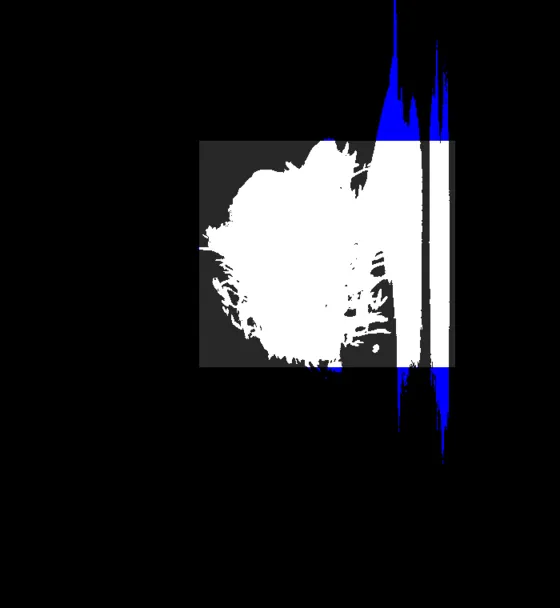
- Check every edit from at least two angles. Our box selection removed the wing but also sliced through the body and an antenna, which is easy to miss from one view.
- For hand selection, start with a free browser editor such as SuperSplat (MIT licence). Tools that select objects for you (SAGA, Gaussian Grouping) need a rented GPU and build on code licensed for research only, so check the licence before using them on paid work.
- Bigger changes, like turning a chair into a sofa, need slower generative tools. The open options we found advertise minutes per edit, not milliseconds, and some are non-commercial only.
Why edit splats with code
A Gaussian splat scene is a long list of small, semi-transparent ellipsoids, each with a position, size, rotation, colour and opacity. There are no objects in the file, so you can't click a chair and change its colour. But if you can say which splats belong to the thing you want to change, a few lines of code can recolour, hide or move them.
We tested that transform step only. Every transform below was written by hand, in the form we would expect a model to produce; we did not test whether a language model can write the transform or choose the region.
Setup and method
All runs took place on 18 November 2026 on an Apple MacBook with an M5 chip and 16 GB of memory, in headless Chrome 157 (WebGL through ANGLE on Metal), with three.js r185 and Spark 2.1.0 at 1920 × 1080. Each edit loaded a splat file, rendered two fixed before views, selected the splats whose centres fall inside a box or sphere, ran a short transform on them, wrote the values back with Spark's setSplat, and rendered the same two after views.
We used two assets from Spark's example files: the butterfly (177,132 splats, a single object) and the valley (500,000 splats, a stylised generated landscape). Each edit was run