A match cut joins two shots that look alike; a jump cut looks like one shot with a gap. Examples from 2001 and Breathless, plus Kuleshov and cross-cutting.
Method. Sources checked November 18, 2026: the Film Art glossary, MIT and Columbia film glossaries, David Bordwell's blog, Richard Raskin on Breathless, Anne V. Coates in CineMontage, Mobbs et al. (2006) and Calbi et al. (2017) in full, with the other Kuleshov replications via published summaries, and Google and Kling model documentation. Vinc makes an AI film studio.
Looking for post-production stages (dailies to DCP)? See [Film Editing and Post-Production Terms](/blog/film-terms-editing-and-post). For every transition type, see [Types of Transitions in Film](/blog/film-transitions-explained).
The grammar under every scene
A match cut joins two shots that look strongly alike, and a jump cut looks like a single shot with a piece taken out; both belong to the grammar of continuity editing. Columbia University's film glossary describes the editing style that spread through Hollywood in the 1930s and 1940s as "invisible cutting, or continuity editing", in which "the narrative is dominant and the audience is not meant to be aware of the changing shots."
The usual way to shoot for it is the one Loyola Marymount's open textbook No-Nonsense Filmmaking teaches. Shoot a master shot that shows "the whole of the action from beginning to end", then shoot coverage, "additional shots that 'cover' the same action as the master shot from varying angles and shot sizes."
This article defines the standard cuts that join that material. The 180-degree rule has its own article. How editors choose where to cut is covered in Walter Murch's Rule of Six.
Cross-cutting: Porter, Griffith and the last-minute rescue
Definition.Film Art (Bordwell and Thompson, 7th ed., 2004) defines crosscutting as "editing that alternates shots of two or more lines of action occurring in different places, usually simultaneously." MIT's Film Lexicon separates
, which uses "the same pattern of alternation, but does not necessarily imply temporal simultaneity."
Place A
Place B
Place A again
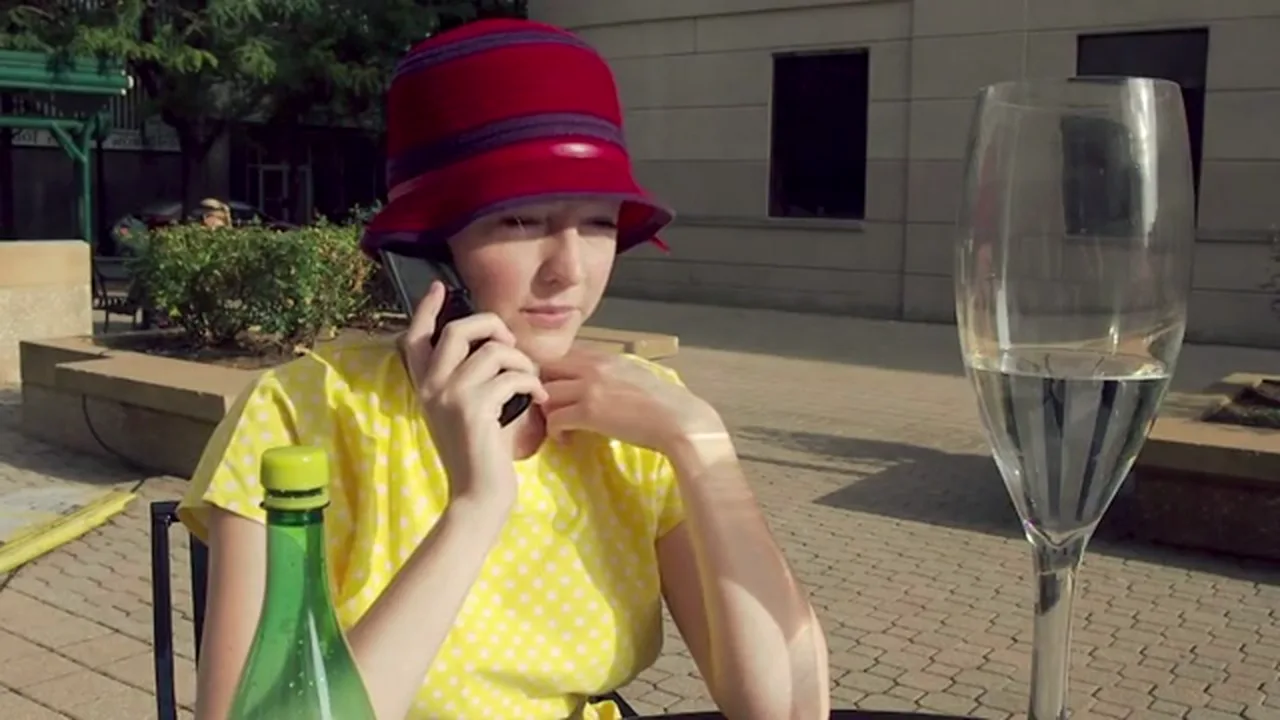
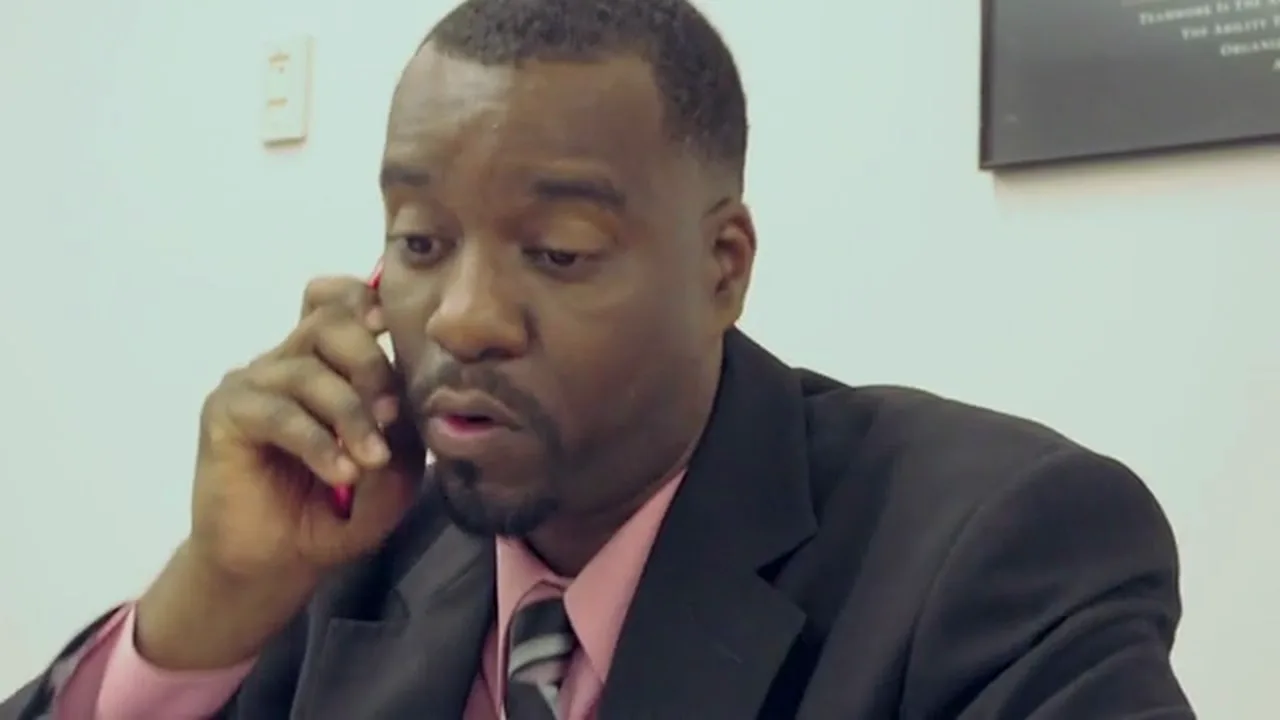
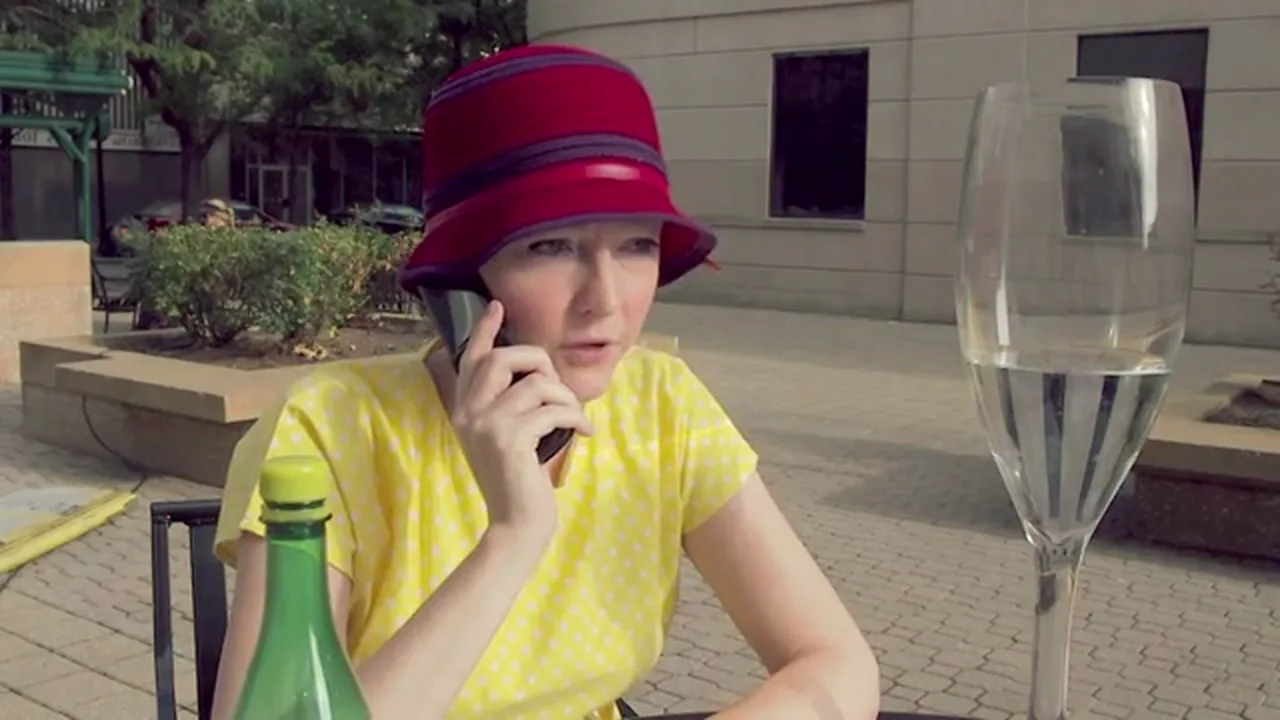
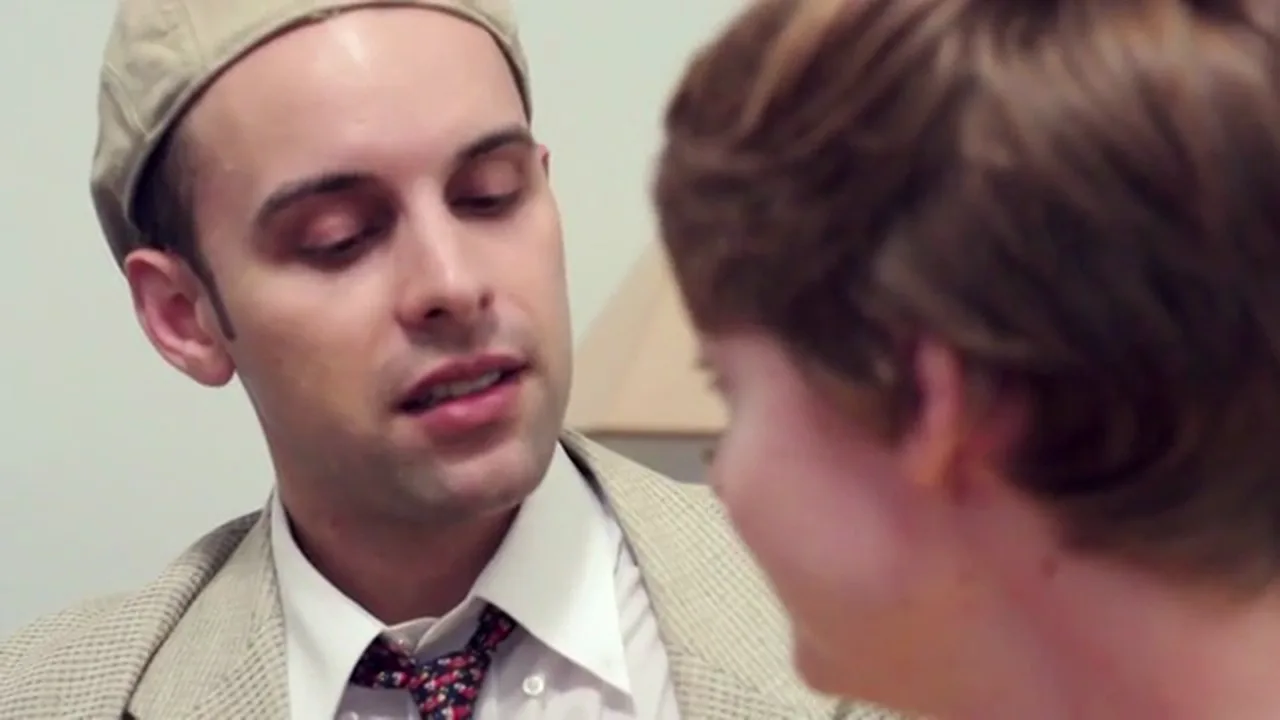
A phone call cut across two places: she sits at an outdoor table, he sits in an office, and the edit alternates between them.Still from A Sad State of Affairs (2009), M.A. Lanoue / Squire Films, CC BY-SA 3.0 US.
Cross-cut
The bound telegraph operator is freed in the station office, then the film cuts away to a dance hall in full swing elsewhere.The Great Train Robbery (1903), Edwin S. Porter. Public domain (US).
Cross-cut
Griffith's last-minute rescue: the husband on the telephone in a lobby far from home, his wife on the other end of the line at home with the children, then back to him.The Lonely Villa (1909), D. W. Griffith. Public domain (US).
Origin. Columbia's glossary traces early cross-cutting to Edwin S. Porter's The Great Train Robbery (1903). In D. W. Griffith's The Lonely Villa (1909), David Bordwell writes, "Griffith uses crosscutting to build suspense," alternating burglars, a trapped family and a husband racing home, "all taking place at the same time." The pattern became known as the last-minute rescue.
A modern example.The Godfather (1972) cross-cuts the baptism of Michael Corleone's godson with the killings he has ordered; in Sarah Rivka's analysis (UC Berkeley), "between each of the following murders, there is at least one cut back to Michael."
The Kuleshov effect explained: the claim and the replications
The claim. In the late 1910s or early 1920s, Lev Kuleshov is said to have cut a close-up of the actor Ivan Mozzhukhin's neutral face against "a little girl playing with a doll," "a dead woman in a coffin" and "a bowl of soup" (Calbi et al., 2017). Viewers "reportedly perceived the actor's neutral face as expressing an emotion congruent with the preceding context." Meaning comes from the cut, not only the shot.
The Kuleshov pattern on a timeline: the same neutral face (shot A), a cut to the object (soup, coffin or child), then back to the same face. The face doesn't change; the claim is that the viewer's reading of it does.
The caveats. Kuleshov and Pudovkin gave different versions of it, and no film of it is known to survive. Modern replications:
Study
Participants
Design
Result
Prince and Hensley, Cinema Journal 31(2), 1992
137
Recreated the original; one trial per person, between subjects
No effect. Most participants chose "no emotion"
Mobbs et al., Social Cognitive and Affective Neuroscience 1(2), 2006
14 (fMRI)
Faces paired with positive, negative or neutral movie clips, within subjects
Effect. Context changed how faces were rated, and emotional contexts raised activity in the amygdala and temporal pole, among other regions
Barratt, Rédei, Innes-Ker and van de Weijer, Perception 45(8), 2016
36
24 film sequences of neutral faces, with eye tracking
Effect. Faces after sad contexts were rated most negative; after desire contexts, most positive and aroused
Calbi et al., Frontiers in Psychology 8, 2017
28
18 sequences: neutral faces cross-cut with happy, fearful or neutral scenes
Partial. Fear contexts shifted valence and arousal; happy contexts did not. Emotion labels followed context
The fairest summary: context does change how viewers read a neutral face, but less evenly across emotions than the legend suggests. Prince and Hensley's null result came from a single trial per person, a design Wikipedia's summary calls prone to noise.
Match cut examples, and the graphic match
Definition.Film Art calls it a graphic match: "Two successive shots joined so as to create a strong similarity of compositional elements (e.g., color, shape)." MIT's definition is broader: "any shot transition that reveals a strong visual similarity between the shots."
Shot A
Shot B
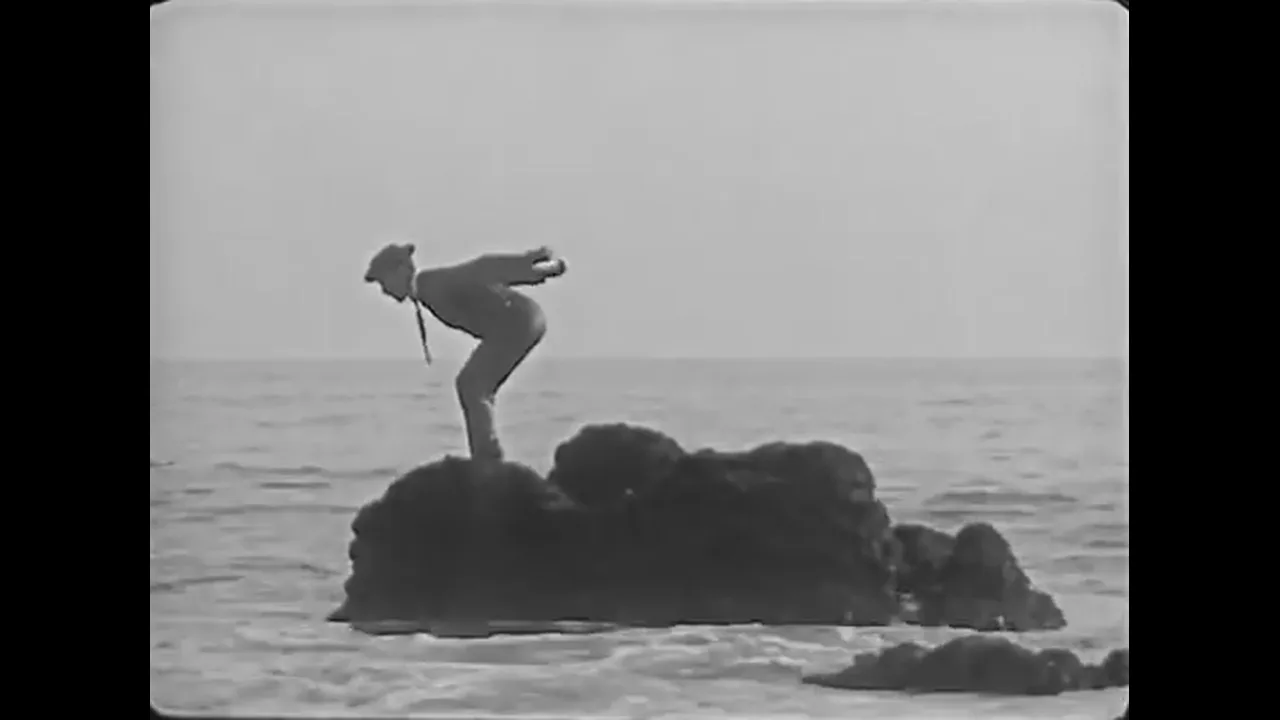
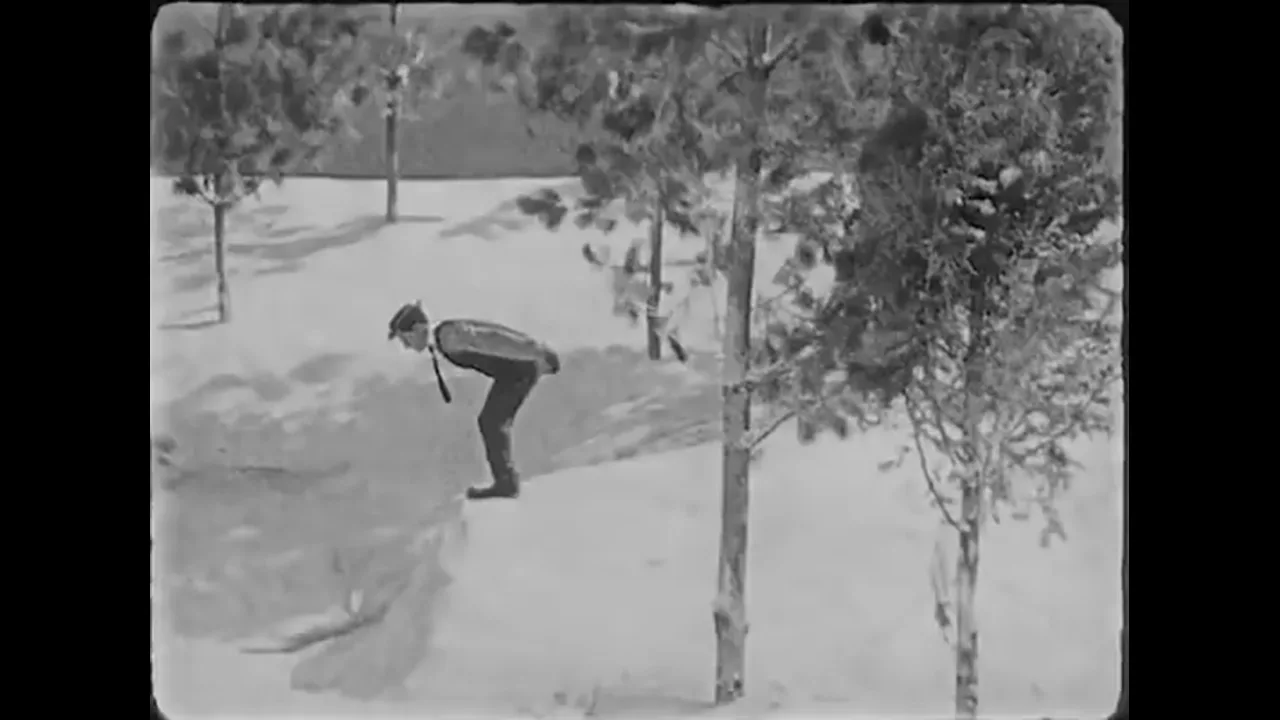
Keaton's bent diving pose stays in the same part of the frame across the cut while the setting changes from sea to snow.Sherlock Jr. (1924), Buster Keaton. Public domain (US).
Match cut
On the cinema screen in the film, Keaton dives off a rock in the sea, and the cut lands him head-first in a snowbank in the same spot of the frame.Sherlock Jr. (1924), Buster Keaton. Public domain (US).
2001: A Space Odyssey (1968). A bone club cuts to a satellite in orbit, linking "primitive and advanced tools" (Wikipedia, "Match cut," citing Duckworth, 2008).
Lawrence of Arabia (1962, edited by Anne V. Coates). Lawrence blows out a match; the film cuts to the desert sunrise. Coates told CineMontage that "it was written as a dissolve from him blowing out the match to the sunrise." The straight cut "didn't quite work" at first; the final version came from taking "two frames off the outgoing shot." A match cut can depend on two frames of timing.
Match on action
MIT defines match on action as "a cut from one shot of an action to a different shot of the action," so the movement seems continuous: a hand reaches for a door in the wide, and the close-up picks it up at the same point in the reach. Eye-tracking research by Tim Smith and John Henderson found these are the cuts viewers most often fail to notice (see the Rule of Six article).
Jump cut meaning: Breathless and the coin toss
Definition.Film Art: "An elliptical cut that appears to be an interruption of a single shot. Either the figures seem to change instantly against a constant background, or the background changes instantly while the figures remain constant." Columbia's glossary adds that it is "typically used to draw the audience's attention to the conventions of filmmaking".
The famous example. Godard's Breathless (1960). Film scholar Richard Raskin ("Five explanations for the jump cuts in Godard's Breathless," P.O.V. 6) gathers the evidence:
The length problem. "The contract specified that the running time not exceed an hour and a half," and Godard said his first cut ran about two and a quarter to two and a half hours.
The method. Godard cut inside scenes. In the convertible scene, he and the editor "flipped a coin" between the two actors' shots; "Seberg remained," giving "one of the best examples in the film of Godard's jump cuts, seven of which turn up here in rapid succession."
Of Raskin's five competing explanations, Godard's own account, the contractual running time, is the one with documentary support.
The connective cuts
Most dialogue scenes are built from these.
Shot
Reverse shot
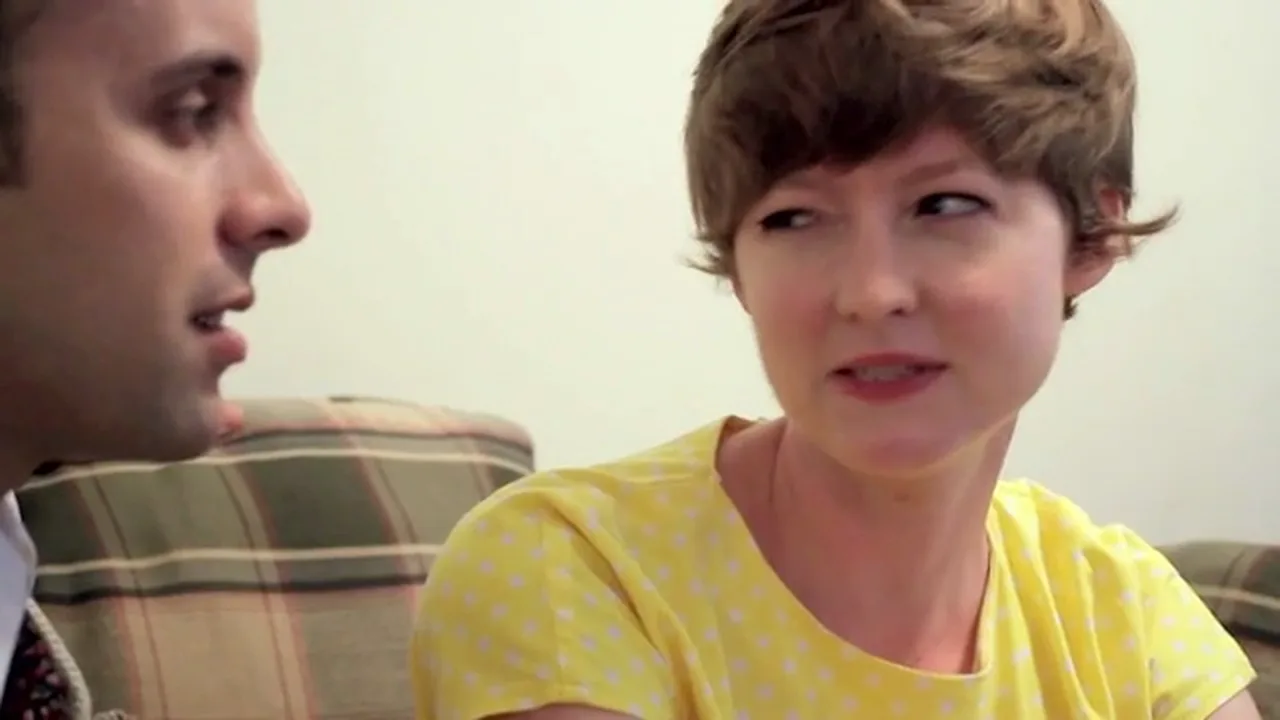
Shot/reverse shot: two consecutive shots from opposite ends of the same conversation, each looking over one character's shoulder at the other.Still from A Sad State of Affairs (2009), M.A. Lanoue / Squire Films, CC BY-SA 3.0 US.
Cut
Definition
Source
Establishing shot
"Usually involving a distant framing, that shows the spatial relations among the important figures, objects, and setting in a scene"
Film Art
Eyeline match
The first shot "shows a person looking off in one direction and the second shows a nearby space containing what he or she sees"
Film Art
Point-of-view shot
Camera "placed approximately where the character's eyes would be," usually cut in before or after a shot of the character looking
Film Art
Shot/reverse shot
"Two or more shots edited together that alternate characters, typically in a conversation situation"
Film Art
Cut-in
"An instantaneous shift from a distant framing to a closer view of some portion of the same space"
Film Art
Insert
A closer or different view of part of the action already in the master shot: a letter, a clock, a hand
Blain Brown, Cinematography: Theory and Practice (2012), as summarised on Wikipedia
Cutaway
"The interruption of a continuously filmed action by inserting a view of something else"
Wikipedia, citing Brown (2012)
An insert shows something the master already contains, only closer; a cutaway goes somewhere the master doesn't, which is why it can hide a missing line or a crossing of the 180-degree line. J-cuts and L-cuts, where sound leads or trails the picture, do the same joining work on the soundtrack.
Continuity grammar in AI-generated video
Google's video prompt guide lists "match cut" and "jump cut" among its cinematic terms, and its Veo 3.1 guide (October 2025) shows timestamp prompting, several shots inside one 8-second generation.
Kling's Multi-Shot guide (July 2026) supports cross-cutting and shot-reverse-shot dialogue, up to 6 shots in a 3 to 15 second generation.
Neither explains how to make a match cut land: the two shots need the same shape in the same place on screen, so describe that position in both (our illustration):
[00:00-00:03] Close-up, a lit match held at frame centre, flame in the upper third. He blows it out.
[00:03-00:06] Extreme wide desert at dawn, the sun rising at frame centre in the upper third, same position as the flame.
For a Kuleshov-style reaction, generate the face once with a deliberately neutral expression and let the cut supply the meaning; judge it in the edit, not the single clip. Jump cuts are the easiest: cutting frames out of one generated take is one, so make them on purpose, against a constant background, as Godard did.
How we compiled this
Definitions come from the glossary of Film Art (7th ed.), MIT's Film Lexicon, Columbia's Film Language Glossary and LMU's open textbook; history from David Bordwell's Observations on Film Art, Richard Raskin's essay on Breathless and Anne V. Coates's CineMontage interview. We read the Mobbs et al. and Calbi et al. papers in full, but took the Prince and Hensley and Barratt et al. figures from Calbi et al.'s review and Wikipedia, as we couldn't open those papers. Model documentation was read on November 18, 2026; Vinc makes an AI film studio.
Sources
David Bordwell and Kristin Thompson, Film Art: An Introduction, 7th ed., McGraw-Hill, 2004, glossary (excerpt hosted by UC Irvine)
Stephen Prince and Wayne E. Hensley, "The Kuleshov Effect: Recreating the Classic Experiment," Cinema Journal 31(2), 1992, pp. 59–75, doi:10.2307/1225144
Aspect Ratios in Film Explained: 1.33 to 2.39 and 9:16, With the History and Delivery Specs
Aspect ratios in film are width divided by height. See where 1.375, 1.85, 2.39, 16:9, IMAX and 9:16 came from, and the containers cinemas and Netflix expect.