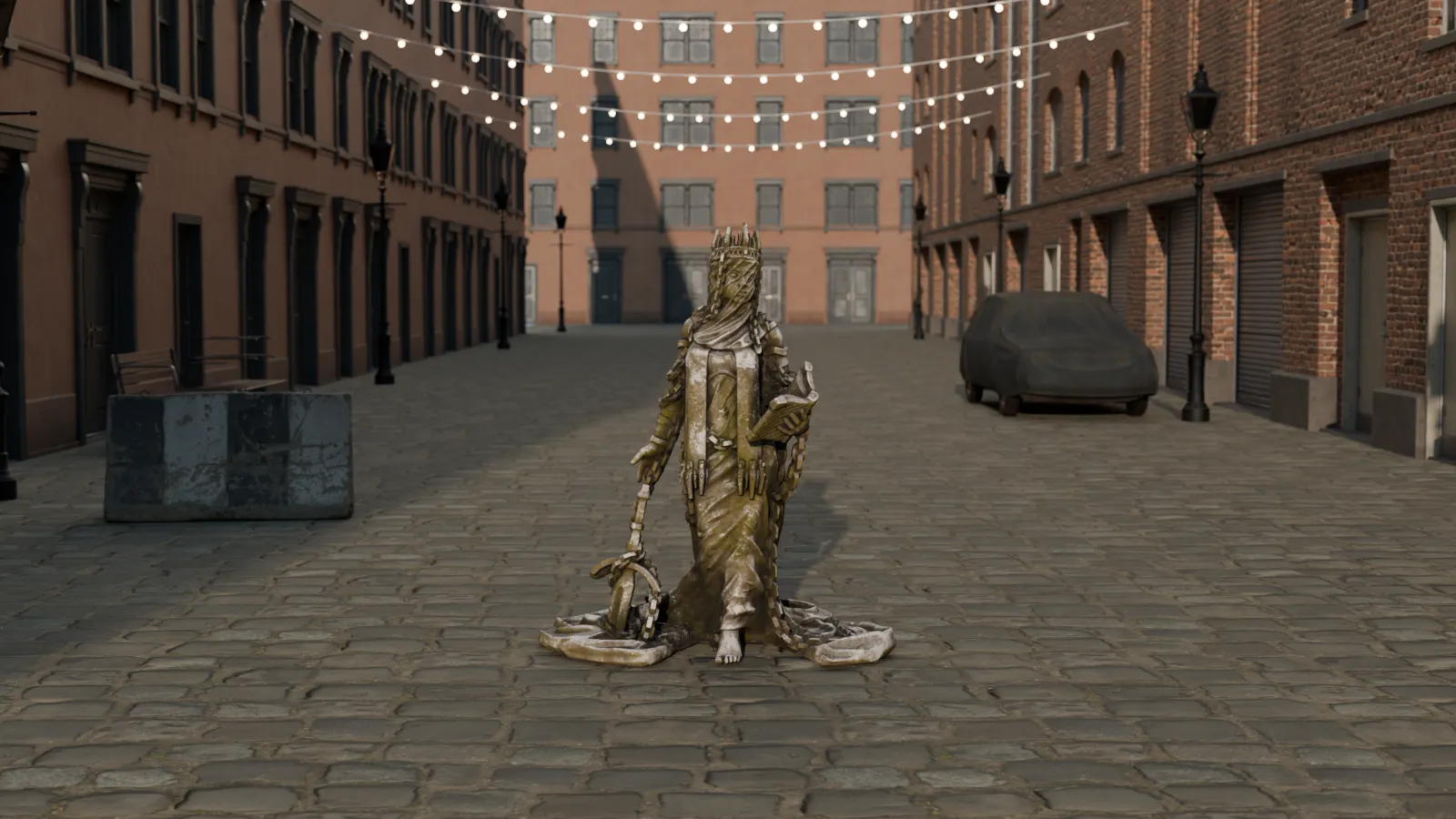
Camera sensor sizes compared, Super 16 to IMAX: makers' own dimensions, the crop factor formula, and why format changes depth of field but not perspective.
Method. Sensor sizes, photosite counts and dynamic-range claims come from ARRI, RED, Blackmagic Design and Kodak spec pages, with Sony figures from NewsShooter because Sony's pages refused our requests. Optics explanations come from American Cinematographer, the ASC and Film and Digital Times. Everything was checked on November 18, 2026. Vinc makes an AI film studio and did not fund or co-author any of the sources.
What "shot on Alexa" tells you, and what it doesn't
Sensor size, or format, is the physical width and height of the area that records the image. "Shot on Alexa" names a family of ARRI cameras, not one picture: ARRI says working models of the first ALEXA were introduced in 2010, and by 2020 it counted eight of the nine cinematography Oscars since then as going to ALEXA-shot films.
The ALEXA 35 sensor measures 27.99 × 19.22 mm; the ALEXA 265 sensor measures 54.12 × 25.58 mm, about 2.6 times the area. Both are "Alexa", but they need different lenses for the same framing and give different background blur. The useful part of a camera name is the format.
Film formats: the dimensions digital sensors inherited
Digital sensor sizes are named after film formats. Kodak's current format guide:
First 3-perf camera mechanism by Rune Ericson with Panavision, 1980s
35 mm 4-perf
24.90 × 18.70
400 ft: 4 min 26 s
"The standard 35mm format"
35 mm 8-perf (VistaVision)
37.72 × 24.92
400 ft: 2 min 13 s
Film runs horizontally, 8 perfs per frame
65 mm 5-perf
52.15 × 23.07
1,000 ft: 8 min 53 s
65 mm 15-perf (IMAX)
70.41 × 56.62
1,000 ft: 2 min 57 s
Film runs horizontally, 15 perfs per frame
Three rows explain most digital naming:
"Super 35" comes from the 24.9 mm-wide 35 mm frame. Digital versions are close but not identical: the ALEXA 35 is about 3 mm wider.
"Full frame" borrows the 36 × 24 mm still-photo frame (43.27 mm diagonal, per Cooke), close to horizontal VistaVision, which is why RED calls its 40.96 mm-wide sensor "VV".
"65 mm" sensors follow 5-perf 65 mm film; ARRI Rental says the ALEXA 65, launched in 2014, matches that frame's size and shape.
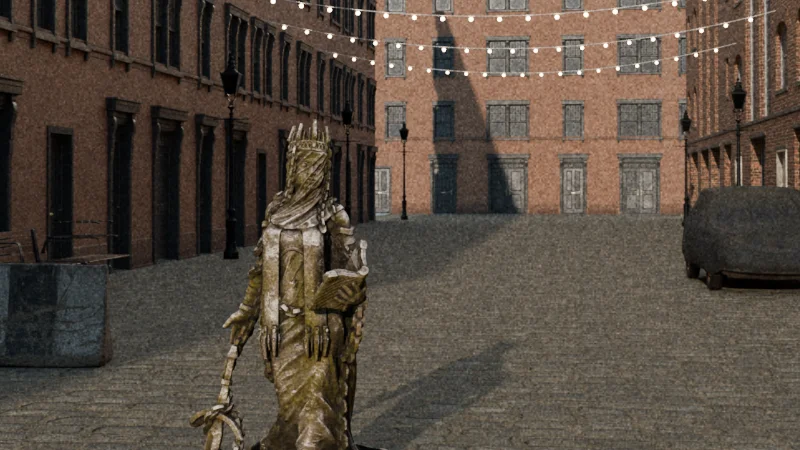
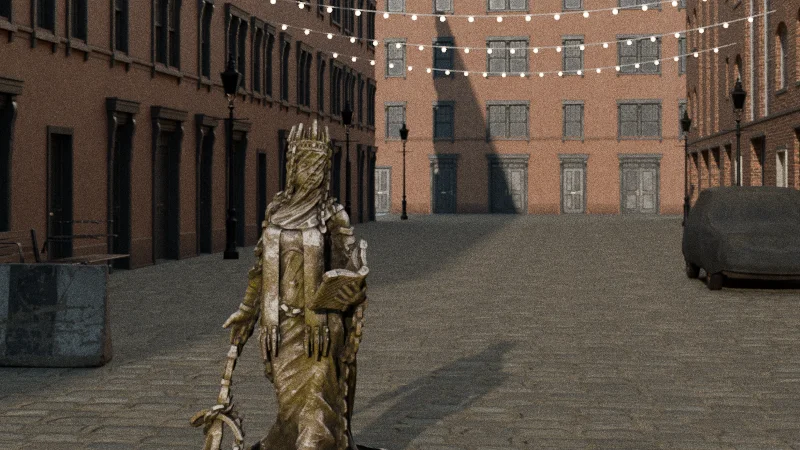
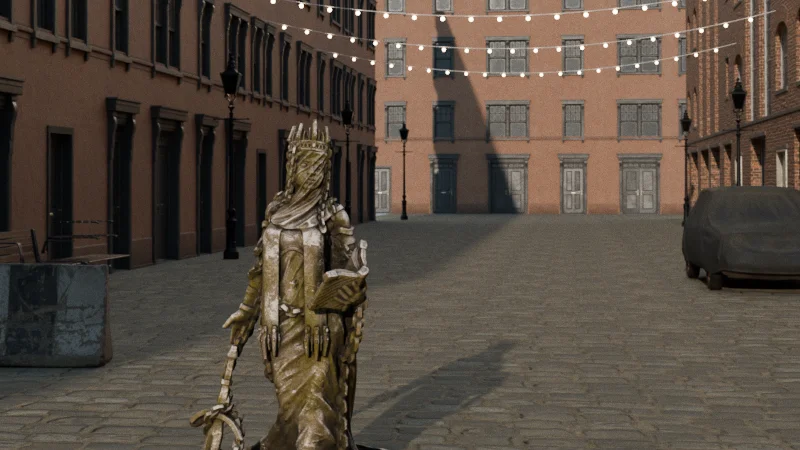
Format size also sets how much the image is enlarged on screen, which is why grain looks so different across gauges:
Super 8
16 mm
Super 35
65 mm
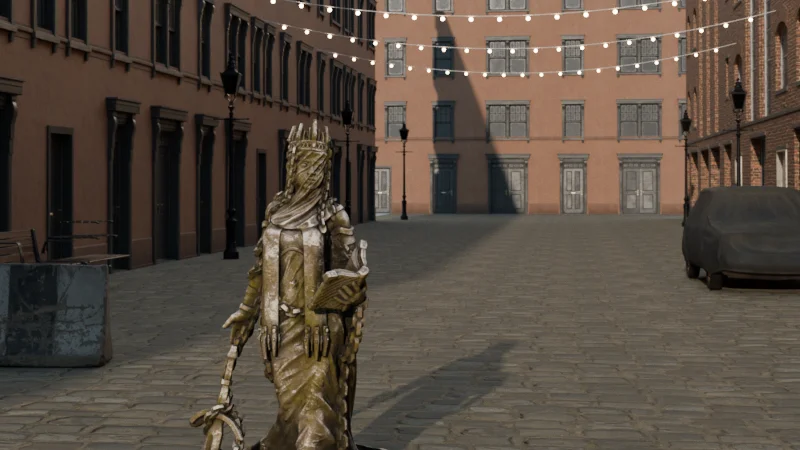
Simulation of the enlargement effect, shown as same-size crops of a 1,600-pixel-wide frame. One grain pattern is laid on the film at the same density in every gauge (an assumed strength, not a measured stock); only the frame width changes: 5.79 mm (Super 8), 10.26 mm (16 mm), 24.89 mm (Super 35) and 52.48 mm (65 mm). Smaller gauges spread fewer grains across the same screen, so the grain looks bigger. Rendered in Vinc's virtual camera lab.Scene: CC0 Poly Haven assets (Gothic Statue by Benny Weimer; facades by James Ray Cock; others listed in our lab notes).
Today's flagship cinema cameras, by the makers' own numbers
Figures from the makers' spec pages except where noted; dynamic range is each maker's own claim.
Camera
Format
Sensor (mm)
Maximum photosites
Stated dynamic range
ARRI ALEXA 35
Super 35
27.99 × 19.22
4608 × 3164
17 stops
ARRI ALEXA Mini LF
Large format
36.70 × 25.54
4448 × 3096
14+ stops
ARRI ALEXA 265
65 mm
54.12 × 25.58
6560 × 3100
15 stops
RED V-RAPTOR XL [X] 8K VV
VistaVision
40.96 × 21.60
8192 × 4320
17+ stops
Blackmagic URSA Cine 12K LF
Large format
35.64 × 23.32
12,288 × 8040
16 stops
Sony VENICE 2 (8.6K)
Full frame
not verified
8640 × 5760
16 stops
ALEXA 265 figures come from ARRI Rental, which says it weighs 3.3 kg against 10.5 kg for the ALEXA 65.
Sony blocked our requests, so the sensor size is unverified; resolution and the 16-stop claim come from NewsShooter's launch report.
Resolution and format are separate. The Blackmagic has almost twice the photosites across of the ALEXA 265 (12,288 against 6560) on a sensor about a third narrower. ARRI's photosites are 8.25 µm on the ALEXA 265 and Mini LF, 6.075 µm on the ALEXA 35.
Dynamic range, and what film is rated for
A stop is a doubling or halving of light, so a 17-stop claim means the brightest recordable value is 2¹⁷ times the darkest, roughly 131,000 to 1. The makers measure it differently:
ARRI says the Mini LF's 14+ stops hold "over the entire sensitivity range from EI 160 to EI 3200", measured with its own Dynamic Range Test Chart (DRTC-1).
NewsShooter reports that Sony's 16 stops for the VENICE 2 split into 6 stops above middle grey and 10 below.
RED states "17+ stops" for the V-RAPTOR [X] and gives no method on the product page.
ARRI's revised 65 mm sensor in the ALEXA 265 went from 14 to 15 stops, according to NewsShooter.
With different charts, noise thresholds and exposure indexes, a one-stop gap on paper does not tell you which camera holds more highlight detail.
Film gives no single stop count. Kodak's VISION3 500T datasheet gives exposure indexes of 500 under tungsten and 320 in daylight with an 85 filter, says the stock "enables 2 stops of extended highlight latitude", and warns that with traditional 10-bit scanning "highlight information captured on these film could be lost". Film's range depends on the scan as well as the stock.
Camera brands and their log curves: what the published maths shows
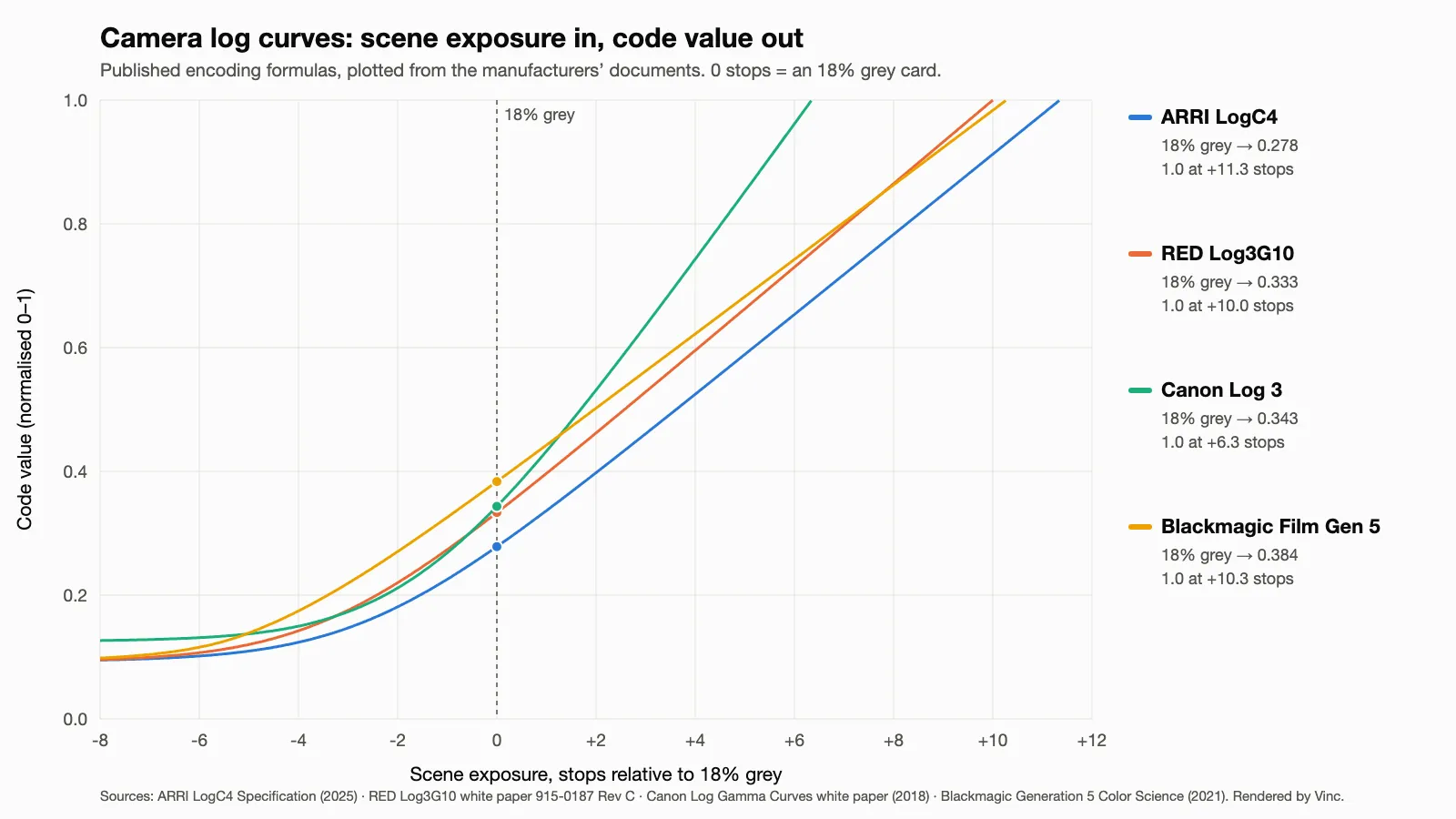
Each maker publishes its own log formula. Below, four are plotted exactly as printed in the ARRI LogC4 specification (January 2025), RED's REDWideGamutRGB/Log3G10 white paper (Rev C), Canon's "Canon Log Gamma Curves" (November 2018) and Blackmagic's Generation 5 Color Science reference (May 2021). Each reproduces its document's 18% grey value: 0.278 for LogC4, 0.333 for Log3G10, 0.343 for Canon Log 3 and 0.384 for Blackmagic Film Gen 5.
Log curves
Scene exposure in stops relative to an 18% grey card against normalised code value, plotted from each maker's published formula and constants. The point where a curve reaches 1.0 is the top of the encoding, not the sensor's dynamic range. RED's paper says Log3G10 reaches 1.0 "10 stops above mid grey", and Blackmagic's says Gen 5 "encodes 10.27 stops above 18% grey". Plotted by Vinc.Sources: ARRI LogC4 Specification (2025), Eq. 2; RED 915-0187 Rev C, p.4; Canon Log Gamma Curves (2018), App. 3a; Blackmagic Gen 5 Color Science (2021), p.2. Sony S-Log3 is left out: Sony's technical summary refused our download, so we couldn't check its formula against the source.
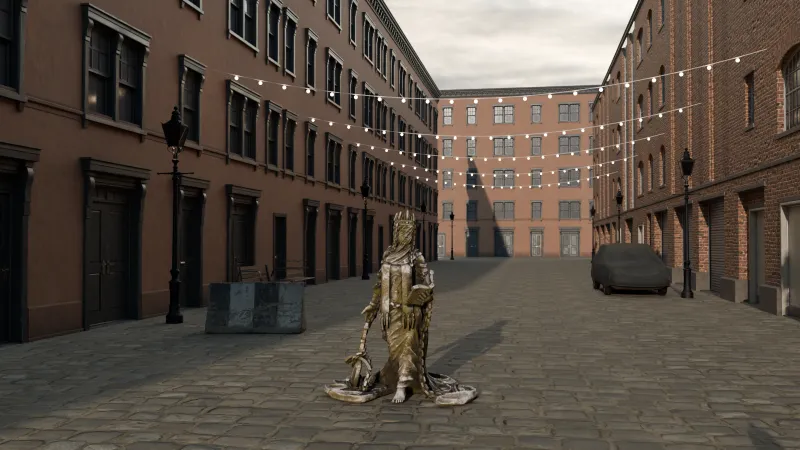
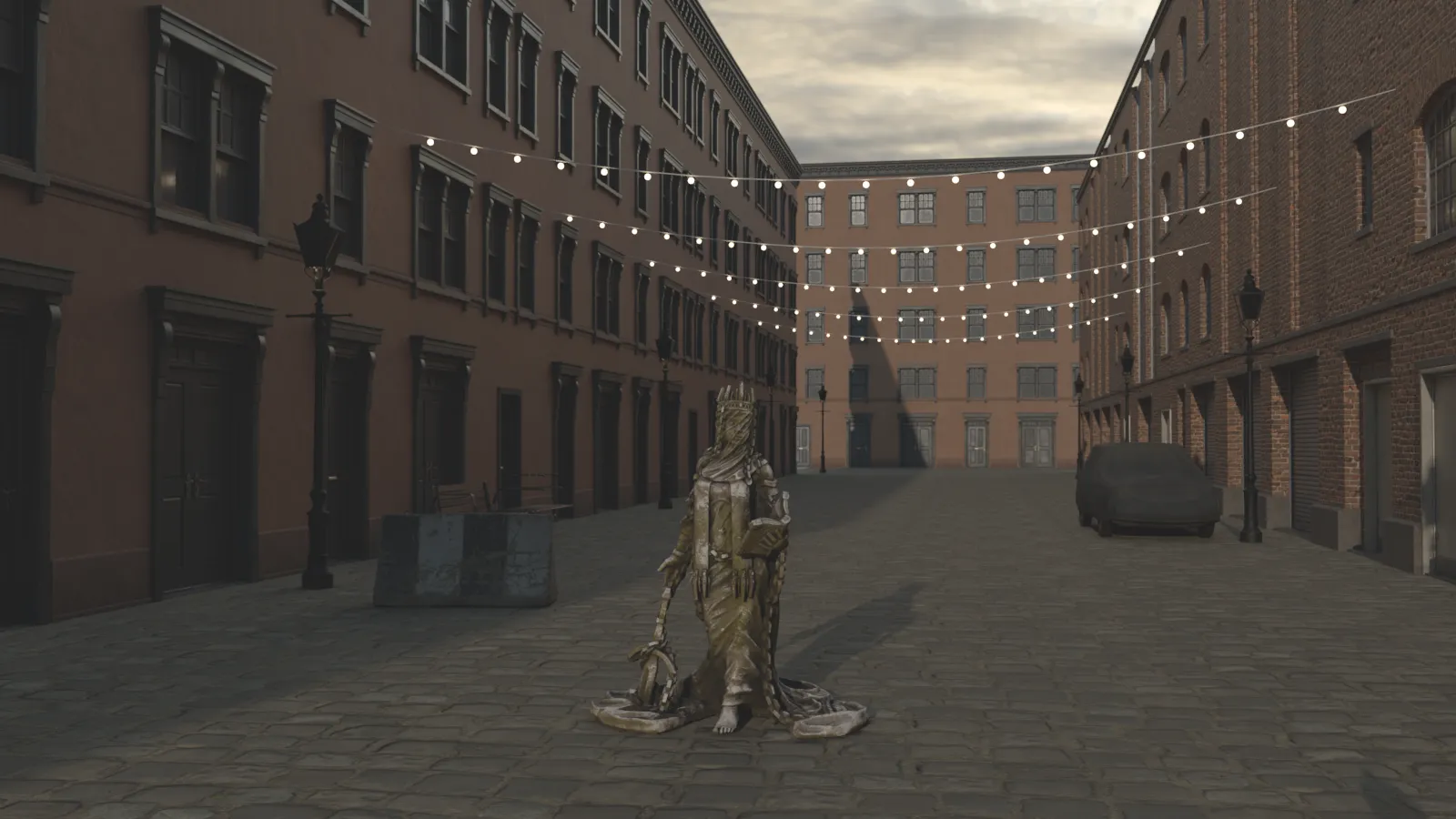
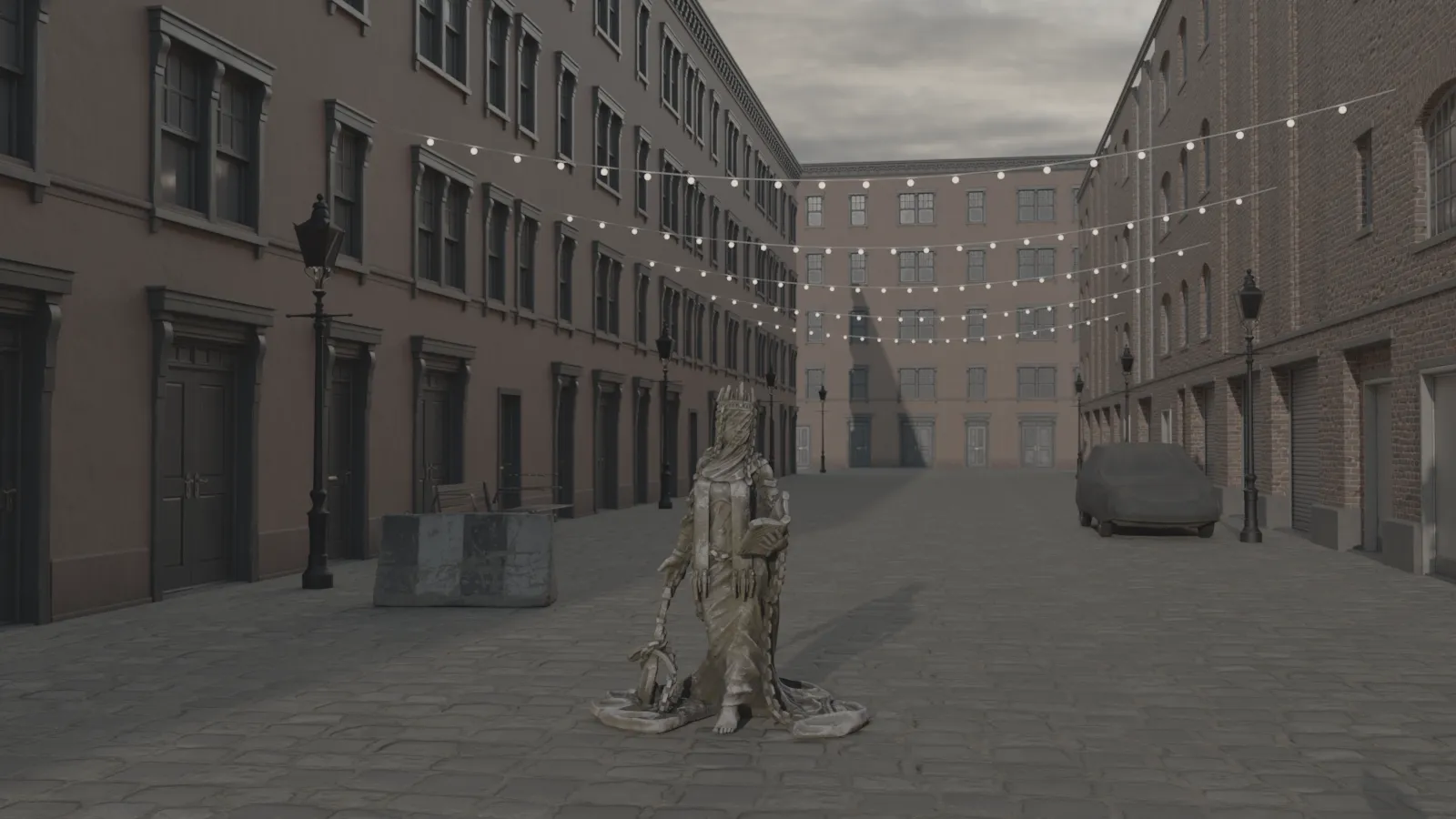
To see what the curves do, we encoded one scene-linear render with each formula in each maker's published gamut, shown with no LUT. This is encoding maths only, not any camera's sensor, noise or "look".
Rec.709 display
ARRI LogC4
RED Log3G10
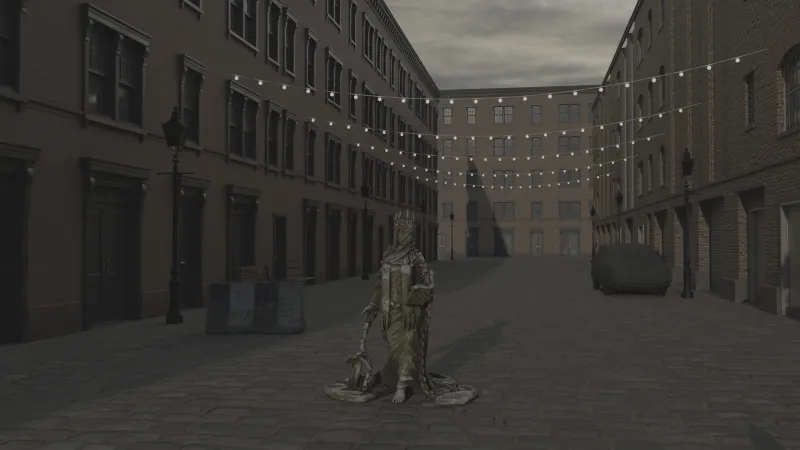
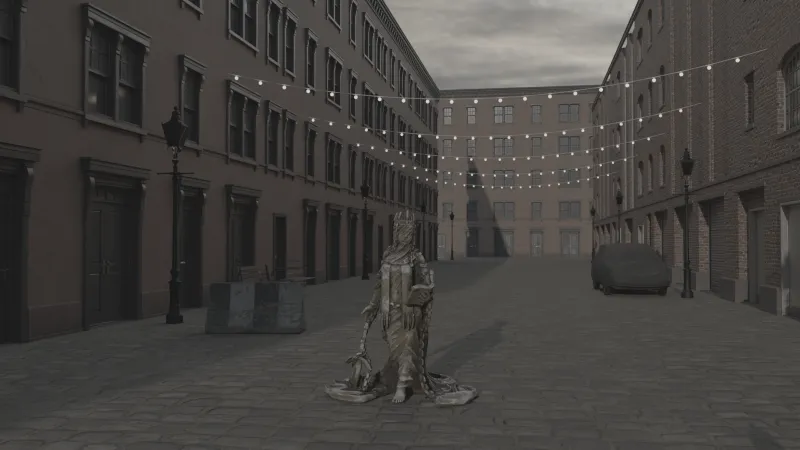
One render, three encodings. Left: a display version (Blender's AgX tone curve with Rec.709/sRGB output, a generic transform rather than any maker's LUT). Middle: encoded with the published LogC4 curve in ARRI Wide Gamut 4. Right: the published Log3G10 curve in REDWideGamutRGB. This is not ARRI or RED colour science, only their published encoding formulas. LogC4 places grey lowest, so it looks darkest. Rendered in Vinc's virtual camera lab (35 mm, full frame, f/5.6).Scene: CC0 Poly Haven assets (Gothic Statue by Benny Weimer; facades by James Ray Cock; Evening Road 01 sky by Jarod Guest and Sergej Majboroda).
Canon Log 3
Blackmagic Film Gen 5
The same render through Canon Log 3 and Blackmagic Film Generation 5. Blackmagic's curve is applied in Blackmagic Wide Gamut. Canon's white paper doesn't list Cinema Gamut primaries, so the Canon frame keeps Rec.709 primaries, which is why it looks more saturated than the others. That is a gap in our sources, not a Canon trait. Rendered in Vinc's virtual camera lab.Scene: CC0 Poly Haven assets.
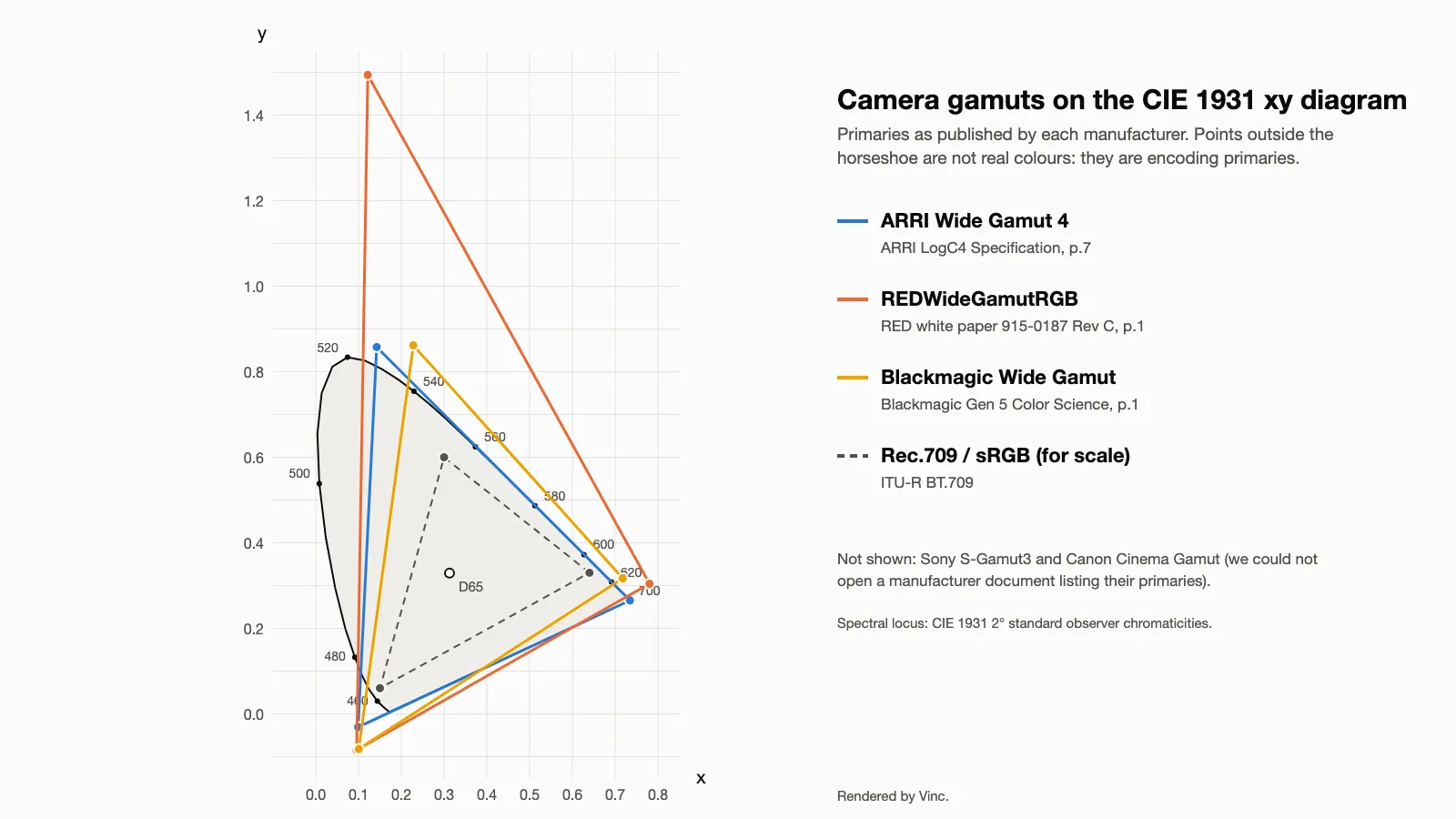
The gamuts differ more than the curves. ARRI Wide Gamut 4, REDWideGamutRGB and Blackmagic Wide Gamut reach far beyond Rec.709, each with at least one primary outside real colours, so nothing the sensor records gets clipped.
Camera gamuts
Primaries as published: ARRI LogC4 specification p.7, RED white paper p.1, Blackmagic Gen 5 reference p.1, with Rec.709 for scale. The horseshoe is the CIE 1931 2° spectral locus. Plotted by Vinc.Sony S-Gamut3 and Canon Cinema Gamut are not shown because we could not open a manufacturer document that lists their primaries.
Crop factor formula, with a sensor size comparison
The crop factor compares a format with a reference, usually 36 × 24 mm full frame:
crop factor = reference diagonal ÷ format diagonal
diagonal    = √(width² + height²)
full frame  = √(36² + 24²) = 43.27 mm
Film and Digital Times gives the matching-lens version:
new lens mm = (new format diagonal ÷ old format diagonal) × old lens mm
Benjamin B's "Practical Optics" notes for the ASC use widths instead, which is better when aspect ratios differ and you want to match horizontal framing. Applied to the formats above:
Format
Diagonal (mm)
Crop factor vs full frame
Lens matching a 50 mm on full frame
Super 16 film
14.48
2.99
16.7 mm
Super 35 4-perf film
31.14
1.39
36.0 mm
ALEXA 35 (open gate)
33.96
1.27
39.2 mm
Full frame 36 × 24
43.27
1.00
50.0 mm
ALEXA Mini LF
44.71
0.97
51.7 mm
VistaVision 8-perf film
45.21
0.96
52.2 mm
RED V-RAPTOR 8K VV
46.31
0.93
53.5 mm
65 mm 5-perf film
57.02
0.76
65.9 mm
ALEXA 265
59.86
0.72
69.2 mm
IMAX 15-perf film
90.35
0.48
104.4 mm
ARRI diagonals are ARRI's figures; the rest are computed.
Lens needed to match a 50 mm on full frame (diagonal angle of view)
Super 1616.7 mm
ALEXA 3539.2 mm
Full frame50.0 mm
ALEXA Mini LF51.7 mm
ALEXA 26569.2 mm
IMAX 15-perf104.4 mm
Computed from Kodak, ARRI and RED published dimensions; crop factor by diagonal.
Drawn to scale in millimetres: Super 16 at the camera-aperture figure of 12.52 × 7.41 mm (Kodak gives 12.42 × 7.44), Super 35 at a standard camera-aperture figure of 24.89 × 18.66 mm (Kodak gives 24.90 × 18.70), full frame, the ALEXA Mini LF (ARRI LF, 36.70 × 25.54 mm) and the 65 mm sensor of the ALEXA 265.
Why sensor size changes field of view and depth of field
Field of view. As Film and Digital Times puts it, "a 12mm lens is always a 12mm lens": the same focal length makes the same size image on any camera, and a bigger sensor records more of it. Benjamin B's rules of thumb: Super 16 is about half of Super 35, Super 35 is almost two-thirds of full frame, and Super 35 is about half of 65 mm.
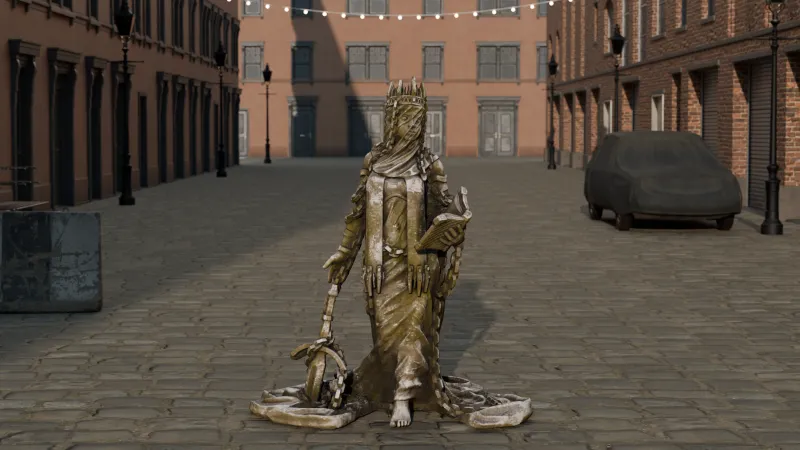
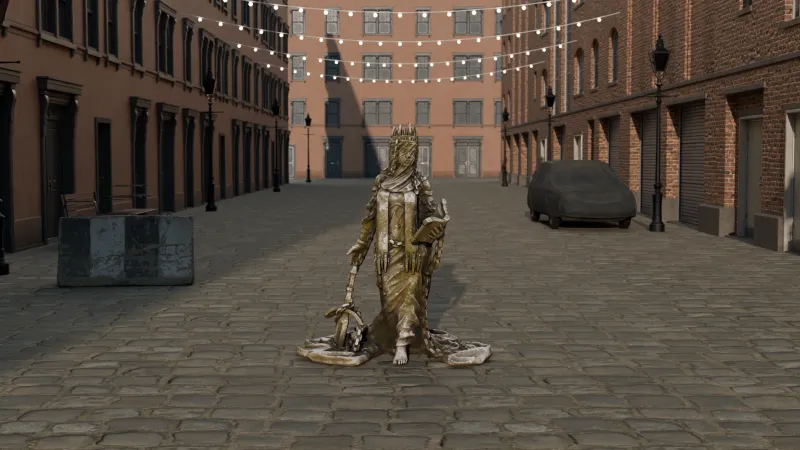
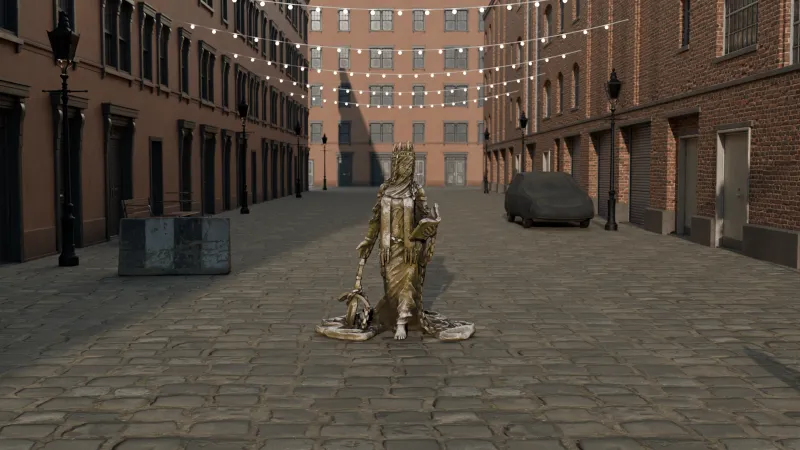
One 50 mm lens on three formats, horizontal angle of view drawn to scale: Super 35 (24.89 mm wide), full frame (36 mm) and the ALEXA 265 (54.12 mm). Computed with 2·arctan(sensor width ÷ 100 mm).
Super 35 · 50 mm
Full frame · 50 mm
Medium format · 50 mm
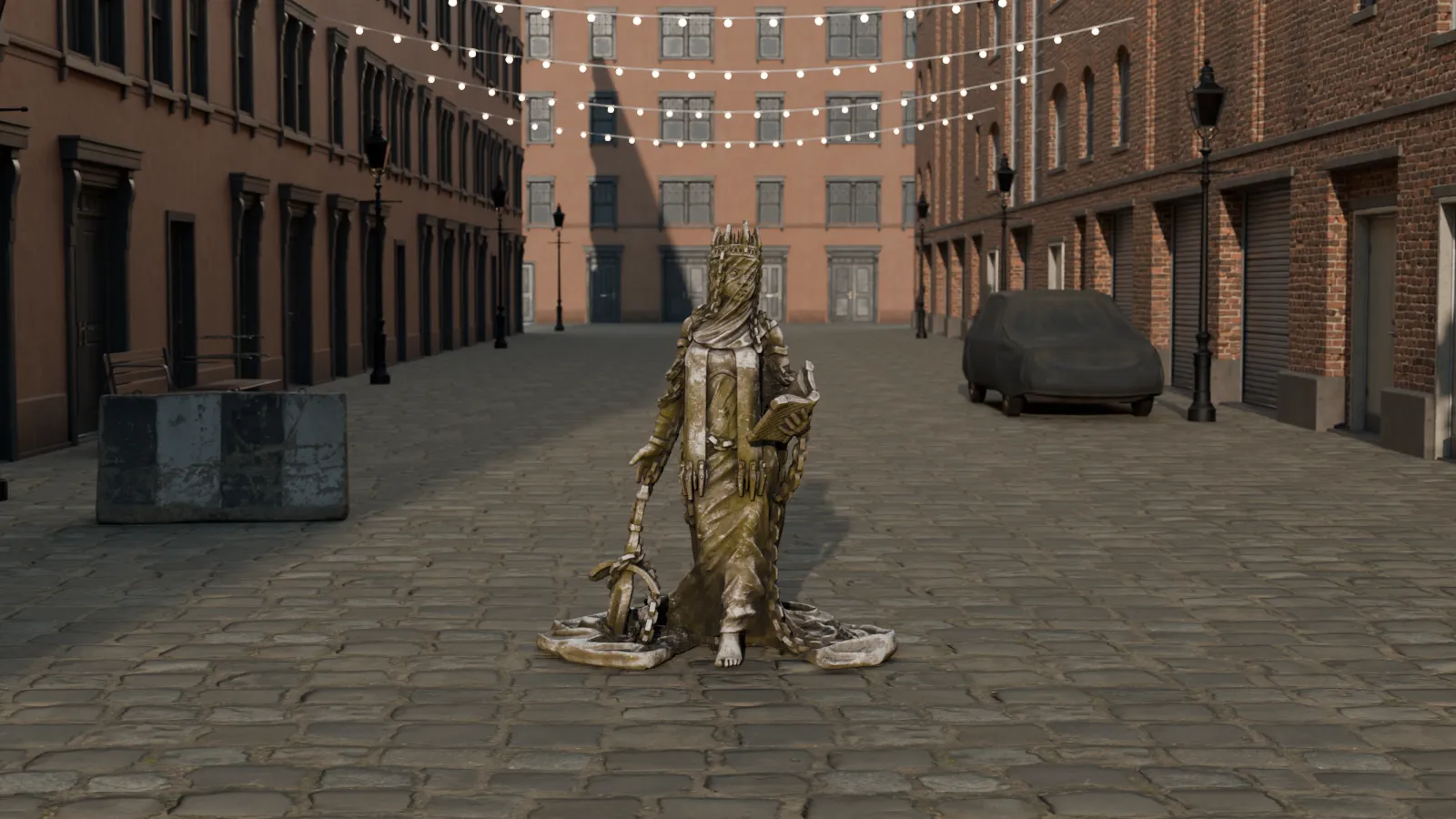
One 50 mm lens at f/4, one camera position 8 m from the statue, three sensor widths: Super 35 (24.88 mm, the ALEXA 35's 4K 16:9 area), full frame (36 mm) and medium format (43.8 mm, Fujifilm GFX). All are 16:9 extractions across the full sensor width. The bigger sensor records more of the same image circle. Rendered in Vinc's virtual camera lab.Scene: CC0 Poly Haven assets (Gothic Statue by Benny Weimer; facades by James Ray Cock; others listed in our lab notes).
Depth of field. At the same focal length and f-stop, a larger sensor just gives a wider shot. Match the framing and it needs a longer lens, and Benjamin B writes that "the longer lenses of the larger formats have less depth of field than the wider ones of the smaller formats."
Depth of field is the zone in front of and behind the plane of focus that looks acceptably sharp; at matched framing and f-stop it is shallower on the larger format.
Steve Yedlin is more exact: blur circles "are determined by the RATIO of the sensor size to the f/stop," so a smaller sensor matches larger-format blur by opening up by the crop factor:
Full frame:          50 mm at f/2.8
ALEXA 35 open gate:  50 ÷ 1.27 ≈ 39 mm at 2.8 ÷ 1.27 ≈ f/2.2
Result: about the same framing and about the same background blur
Super 35 · 35 mm · f/2.8
Full frame · 50 mm · f/2.8
Matched framing, same f-stop: 35 mm on Super 35 (24.88 mm wide) and 50 mm on full frame (36 mm) give nearly the same view (39.1° and 39.6° across) from the same spot, focused on the statue 8 m away. Full frame blurs the background a little more. To match it, the Super 35 lens would need about f/2. Rendered in Vinc's virtual camera lab.Scene: CC0 Poly Haven assets.
Perspective does not change. Jay Holben's 2024 American Cinematographer piece describes Manuel Luebbers shooting Super 35 and 65 mm through a beam-splitter: "the sense of perspective is exactly the same." Perspective is set by where the camera stands.
So a "large-format look" is wide field of view and shallow focus at once. ARRI's Mini LF FAQ notes Super 35 lenses may vignette on large format, although "LF 16:9 is covered by many Super 35 lenses."
How to phrase it in a prompt
A video model has no sensor, so a camera name is only a style cue learned from captions. Google's prompt guide (Veo and Gemini Omni Flash, updated 17 November 2026) lists "shot on 8K camera" as a photorealistic cue, "shot on 35mm film" and "anamorphic widescreen" as cinematic ones, and "shallow depth of field" and "deep depth of field" as optical effects, warning that "some advanced camera lenses are not officially supported. The results and reliability may vary."
Our illustration, not from a vendor guide: name the format's visible results as well as, or instead of, the camera.
Weak:   shot on ARRI Alexa 65
Better: wide shot of a desert road, large-format look: wide field of view
        with the background falling softly out of focus, shallow depth of field

Weak:   shot on 16mm
Better: shot on 16mm film, deep depth of field, the whole room in focus
If you name a camera, pick one whose format matches the depth of field you describe: an IMAX frame with everything in focus would need a very small aperture in practice.
How we compiled this
Sensor sizes, photosite counts and dynamic-range claims come from the makers (Sony's via NewsShooter, as Sony's pages refused us), film formats from Kodak's 2024 guide, optics from American Cinematographer, the ASC, Film and Digital Times and Steve Yedlin; crop factors and unpublished diagonals are our arithmetic, all checked on 18 November 2026. Images captioned "Rendered in Vinc's virtual camera lab" are path-traced Blender Cycles simulations, not photographs, with real sensor widths and focal lengths, a thin lens with a 9-blade iris and exposure from an 18% grey card; log frames apply each maker's published curve and gamut matrix. They show what the optics predict, not lens aberrations, sensor noise or any maker's colour science.
Aspect Ratios in Film Explained: 1.33 to 2.39 and 9:16, With the History and Delivery Specs
Aspect ratios in film are width divided by height. See where 1.375, 1.85, 2.39, 16:9, IMAX and 9:16 came from, and the containers cinemas and Netflix expect.