Types of camera angles in film, from eye level, high and low to bird's-eye, worm's-eye, Dutch and POV, with sourced film examples and video-prompt wording.
Method. Definitions checked on 18 November 2026 against the LMU and LibreTexts open textbooks, Gregg Toland's 1941 American Cinematographer article, Mascelli as quoted on Wikipedia, and Luma's and Google's prompt guides. Vinc makes an AI film studio.
What an angle is
Types of camera angles in film describe where the camera looks from: up, level or down, from what height, and from which side of the subject. Part 1 covered how much of the subject the frame shows; this part covers the position, which has three parts:
Vertical angle. Is the lens looking up, level or down?
Camera height. How high is the lens from the ground, whichever way it points?
Horizontal angle. Is the subject seen from the front, the side or somewhere between?
A fourth part, roll, is rotation around the lens axis. It produces the Dutch angle.
The emotional effects below come from textbooks and vendor guides; they are tendencies, not rules, and context can override them. For the line that keeps angles consistent across cuts, see The 180-Degree Rule and When to Break It. For prompt vocabulary across models, see Camera Language for AI Video Prompts.
The main vertical angles, plus roll (Dutch), over-the-shoulder and POV positions around a subject.
Vertical camera angles: looking up, level or down
Eye level
"At the Eye Level, the camera is around the same height as the subject's eyes" (Video Production Handbook, LibreTexts, section 8.2), giving the impression of being equal to the subject. LMU's No-Nonsense Filmmaking cautions: "Be wary of placing your camera at eye level without a good reason. An eye-level approach should not be your default starting point."
In a prompt: Google's video generation prompt guide: "Eye-level shot: offers a neutral, common perspective, as if viewed from human height."
The neutral angle
The neutral angle is eye level with the camera level and no roll. Wikipedia's "Camera angle" article describes "a neutral shot or eye-level (EL) shot" as one that "has little to no psychological effect on the viewer. This shot is when the camera is level or looking straight on with the subject."
A neutral angle is not a neutral image. In Lev Kuleshov's editing experiment (the Kuleshov effect), the same expressionless close-up was cut next to a bowl of soup, a girl in a coffin and a woman on a divan, and viewers read hunger, grief and desire into it. An angle that adds no meaning still takes meaning from the shots around it.
High angle
"From a High Angle, the viewer is looking down at the subject" (Video Production Handbook). LMU: "This angle can make the subject look small and inferior." Wikipedia's "High-angle shot" article notes that the height required "is low enough to be achieved without flight", which separates it from a bird's-eye view.
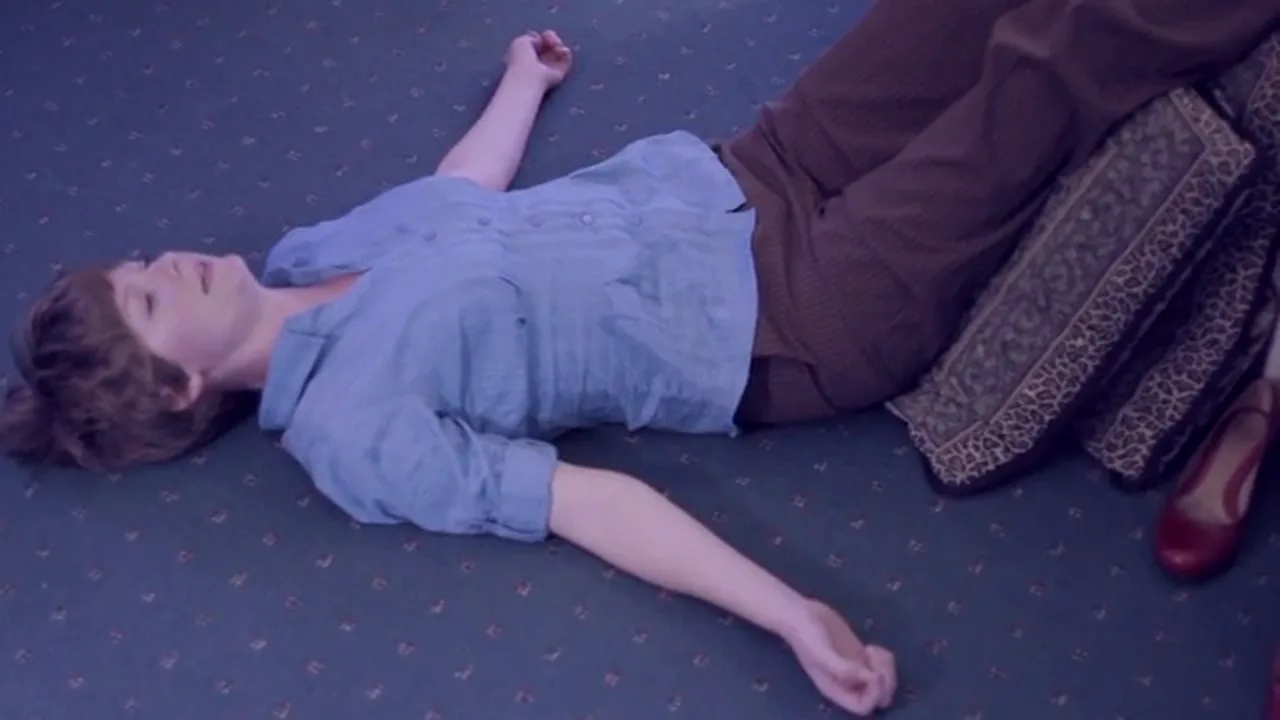
High angle
The camera looks down at her lying on the floor.Still from A Sad State of Affairs (2009), M.A. Lanoue / Squire Films, CC BY-SA 3.0 US.
High angle
Looking steeply down the Odessa steps, a mother carries her son up past the bodies while the soldiers' long shadows reach into the frame from below.Battleship Potemkin (1925), Sergei Eisenstein. Public domain (US).
In a prompt: Google's guide: "places the camera above the subject, looking down, which can make the subject seem small, vulnerable, or part of a larger pattern."
Low angle
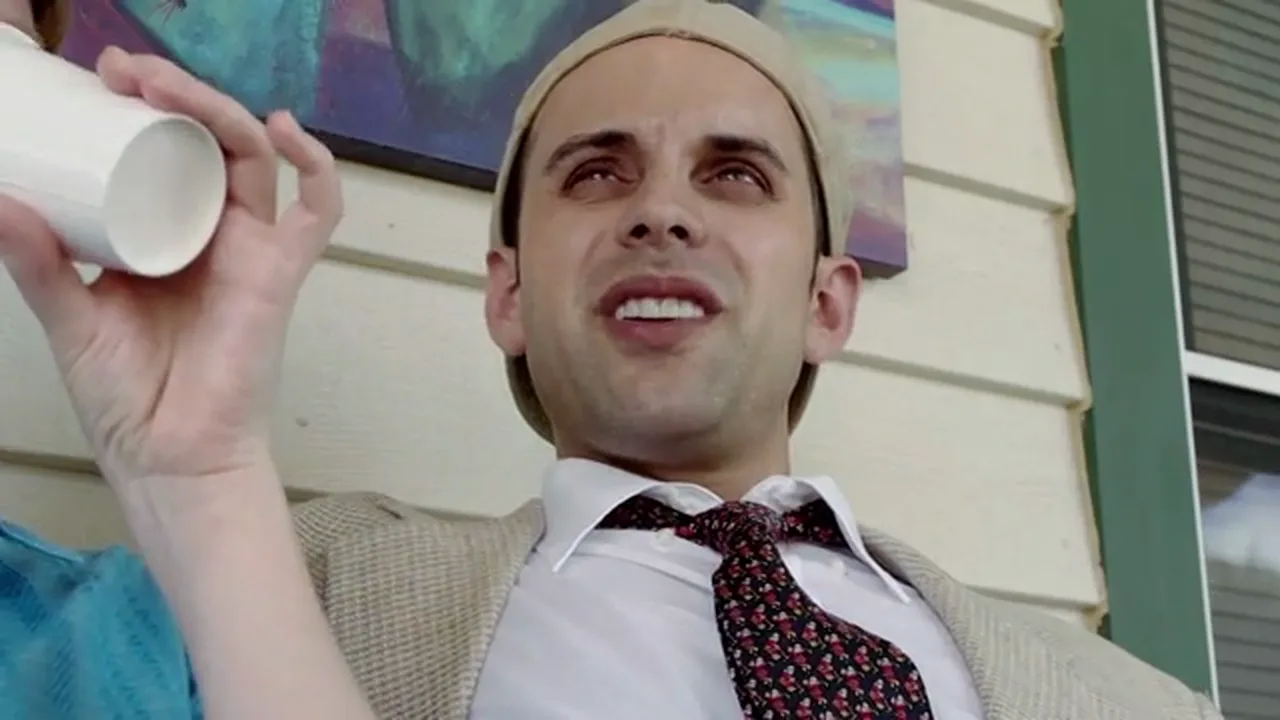
"A Low Angle shot looks up at a subject" (Video Production Handbook). The handbook says it makes the subject seem powerful and dominant. Wikipedia's "Low-angle shot" article places the camera "anywhere below the eye line, looking up."
Low angle
The camera sits below him and looks up, so the wall and painting rise behind his head.Still from A Sad State of Affairs (2009), M.A. Lanoue / Squire Films, CC BY-SA 3.0 US.
Example. For Citizen Kane (1941), Gregg Toland wrote in American Cinematographer (February 1941) that "the majority of our sets for Citizen Kane had actual ceilings" and "many of our camera angles were planned for unusually low camera setups." A low camera looks up into the space where studio sets usually hide their lights.
In a prompt: Google's guide: "positions the camera below the subject, looking up, making the subject appear powerful or imposing."
Hero angle
"Hero angle" and "hero shot" are working names for a low angle used to make a person or product look impressive, not a separate position. Luma's camera-angle guide calls low angles "Perfect for hero shots"; we found no textbook that defines a hero angle as distinct.
Bird's-eye view, overhead, top-down
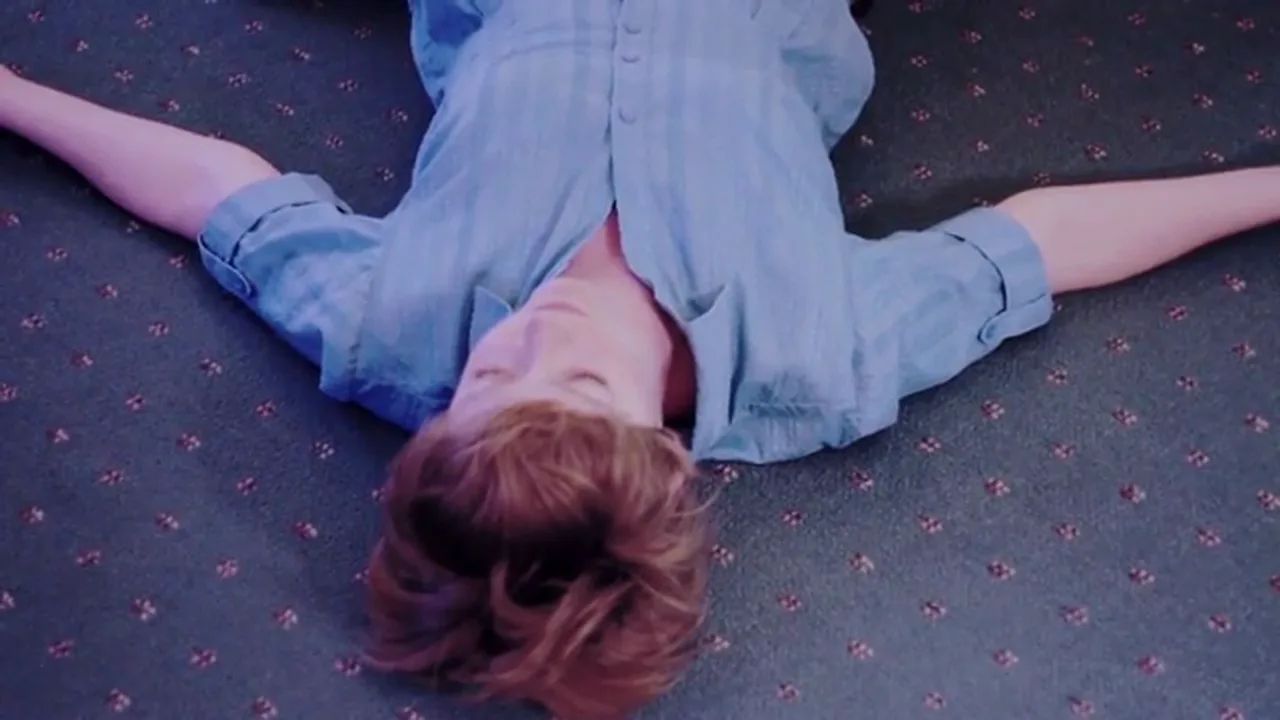
"In filmmaking and video production, a bird's-eye shot refers to a shot looking directly down on the subject" (Wikipedia, "Bird's-eye view"), making the subject appear "short and squat." LMU says it can have a "god-like" quality, "giving the impression of being all-knowing and all-seeing."
Bird's-eye view
The camera looks straight down at her on the carpet.Still from A Sad State of Affairs (2009), M.A. Lanoue / Squire Films, CC BY-SA 3.0 US.
In a prompt: Google's guide: "Bird's-eye view or top-down shot: a shot taken directly from above, offering a map-like perspective of the scene."
Worm's-eye view
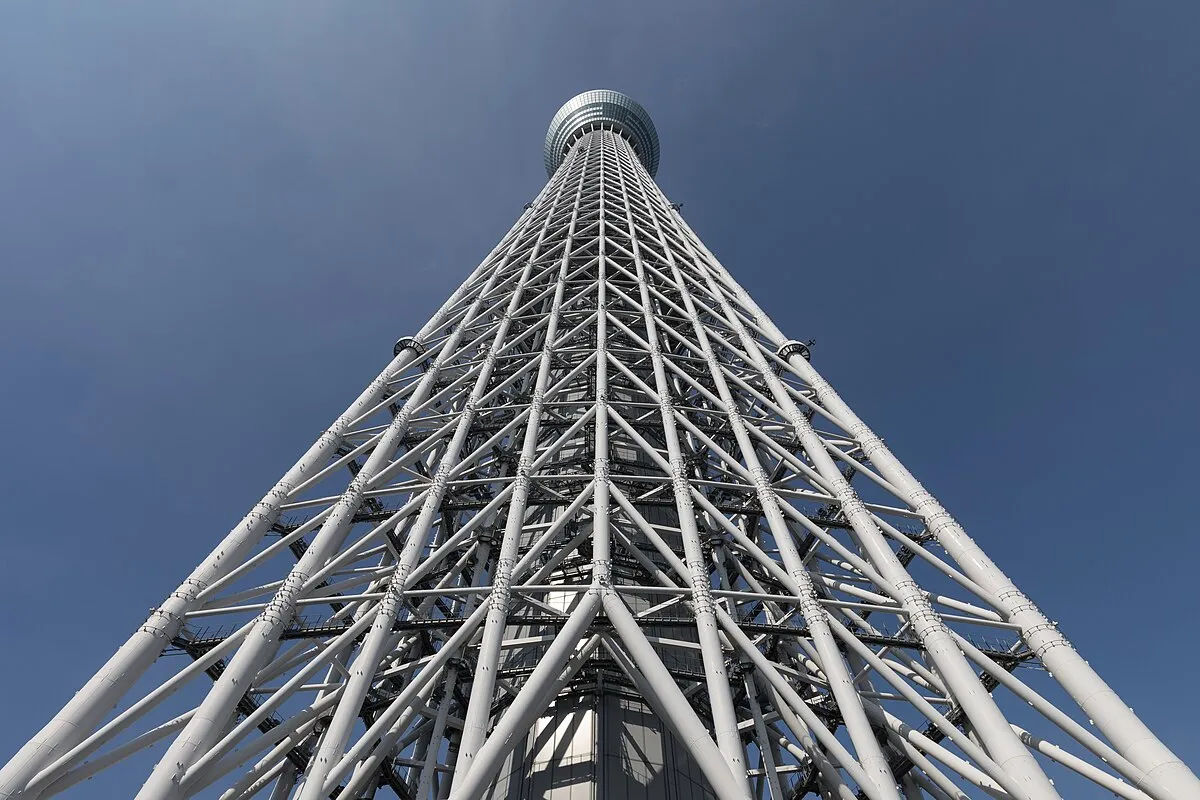
A worm's-eye view, or frog's-eye view, is "a very steep, low angle", the inverse of a bird's-eye view (Wikipedia, "Worm's-eye view"). Objects "loom and tower above the subject," and the viewer can feel "physical vulnerability and smallness."
Worm's-eye view
Looking straight up from the base of Tokyo Skytree, the steel lattice converges toward the top of the frame.Photo: Basile Morin, Wikimedia Commons, CC BY-SA 4.0.
In a prompt: Google's guide: "a very low-angle shot looking straight up from the ground, emphasizing height and grandeur."
Worm's-eye: the most extreme low angle, looking almost straight up.
Camera height
A camera can sit low and still look level. Luma is the only vendor source we found that names heights separately, so these are one vendor's usage, not a textbook standard.
Shoulder level
Luma: "Slightly below eye level. Feels like you're in the scene rather than observing it."
Hip level
Luma: "Camera positioned at hip height. Classic cowboy framing." This links to the cowboy shot from part 1, which is framed to keep a holstered gun in view.
Knee level
Luma: "Between ground and hip. Creates subtle power dynamics."
Ground level
Luma: "Camera at ground height but not necessarily looking up." This is what separates it from a worm's-eye view, which does look up.
Horizontal angle and roll (the Dutch angle)
Profile
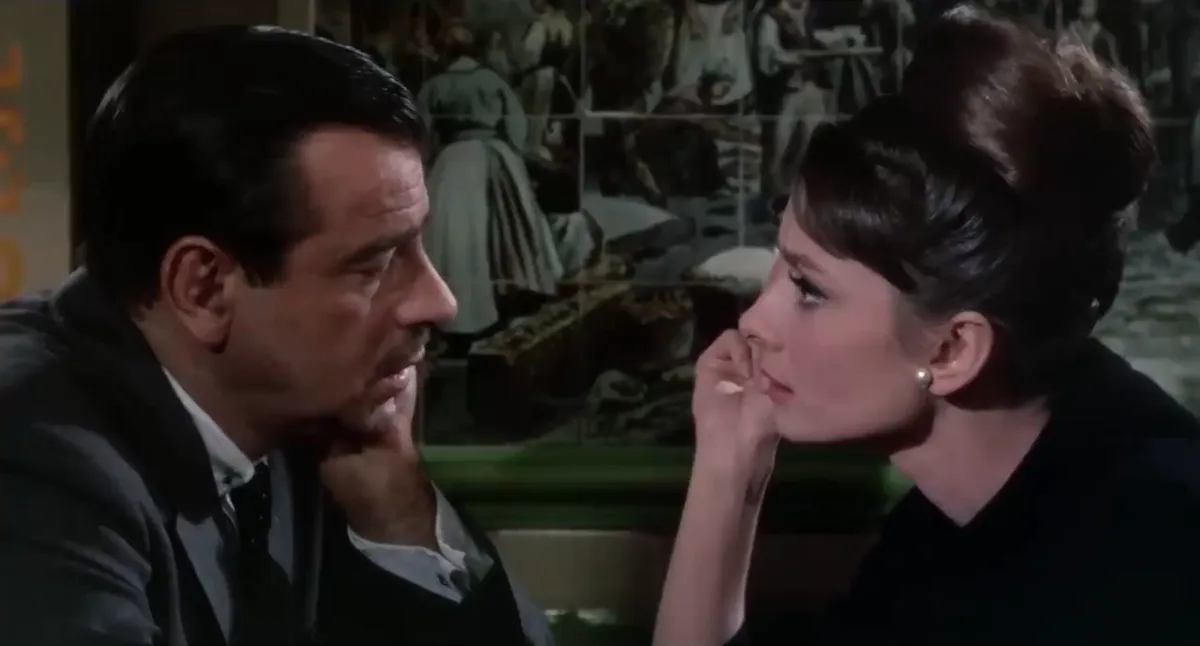
A profile shows the subject from the side: in Luma's words, "Subject from the side, emphasizing contour and silhouette definition." Wikipedia's "Two shot" article names the two-person version: an "American two shot" shows "the two heads facing each other in profile to the camera."
Profile
The man on the left is seen almost side-on, facing the woman on the right, whose face is also turned close to profile.Charade (1963), Stanley Donen. Public domain (US).
Three-quarter view
A three-quarter view sits, in Luma's words, "Between frontal and profile, approximately 45 degrees to the subject," and is the usual horizontal angle for singles in a conversation.
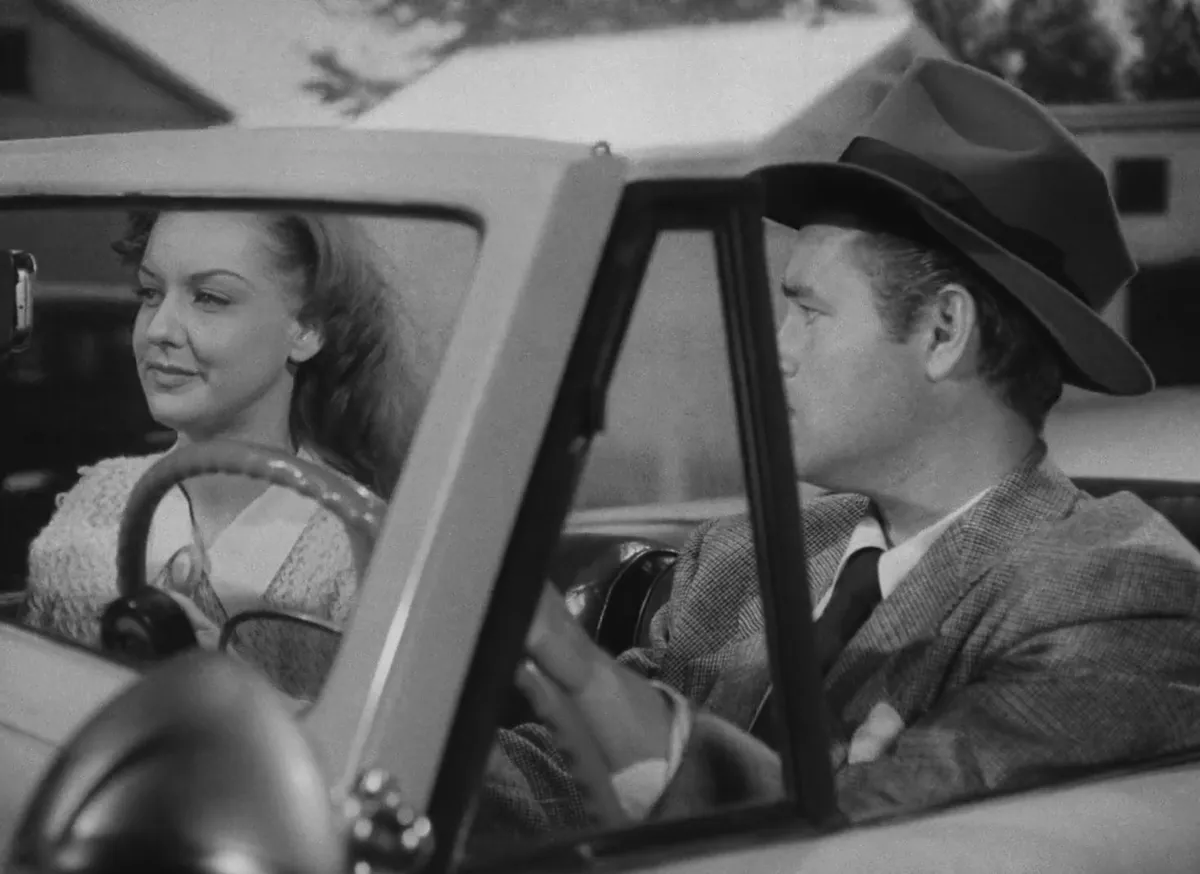
Three-quarter view
In the car, the woman is turned about halfway toward the camera while the driver beside her is seen in profile.Detour (1945), Edgar G. Ulmer. Public domain (US).
Dutch angle, canted angle
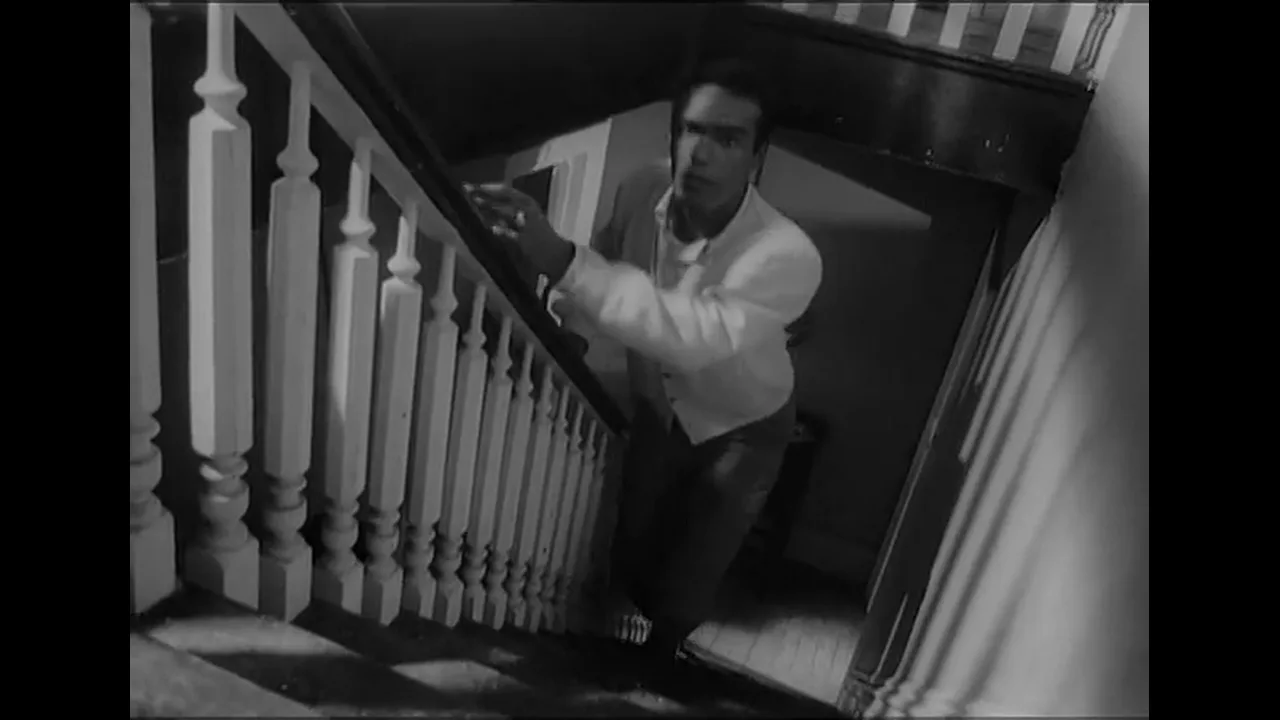
A Dutch angle is a shot where the camera "has been rotated around the axis of the lens" (Wikipedia, "Dutch angle"), so the horizon is no longer parallel with the bottom of the frame: a roll held still. LMU: "It can be a way to indicate that things are not 'okay.'"
Dutch angle
The camera is rolled, so the banister and stairs run at a steep slant across the frame.Night of the Living Dead (1968), George A. Romero. Public domain (US).
Dutch angle
In the farmhouse siege the camera is rolled well off level, so the boarded door and stair rail run diagonally as a man scrambles past them.Night of the Living Dead (1968), George A. Romero. Public domain (US).
Origin and example. "Dutch" may be a corruption of Deutsch, after German expressionist films; the earliest recorded use is Edwin S. Porter's Dream of a Rarebit Fiend (1906). The Third Man (1949) "makes extensive use of Dutch angle shots" (Wikipedia, "Dutch angle").
In a prompt: Google's guide: "the camera is tilted to one side, creating a skewed horizon line, often used to convey unease, disorientation, or dynamism."
Dutch angle: the camera is rolled around the lens axis, so the horizon tilts.
Point-of-view shots: whose eyes the camera uses
Point-of-view shot (POV)
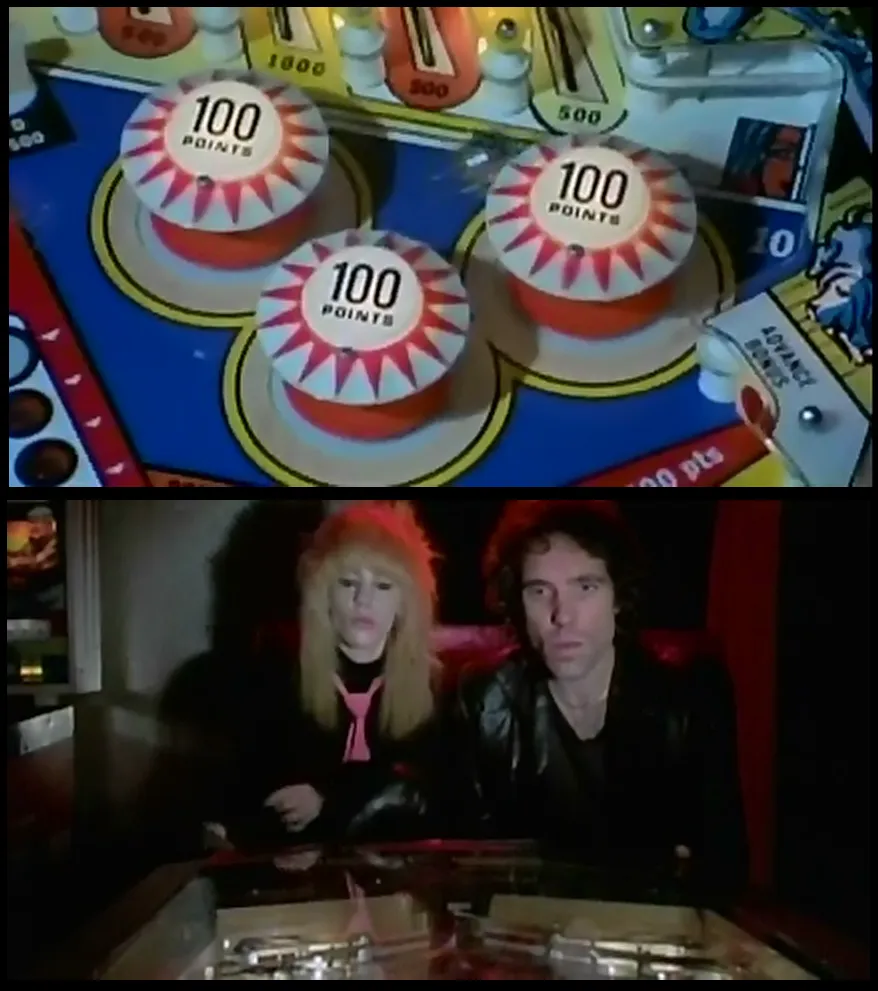
A POV shot shows "what a certain character is seeing from their perspective" (Wikipedia, "Point-of-view shot"). The audience only reads a shot as POV when the film tells them to, usually by showing a character looking, then the POV shot, then the character's reaction.
Point-of-view shot
Top: the pinball bumpers seen close up from the player's position. Bottom: the two characters looking down at the machine.The Driller Killer (1979), Abel Ferrara. Public domain (US); frame comparison via Wikimedia Commons.
Look, then POV
An early look-then-POV pair: a man puts his eye to a telescope, and the next shot shows what he sees, a woman's ankle on a bicycle pedal inside a round eyepiece mask.As Seen Through a Telescope (1900), George Albert Smith. Public domain (US).
Example.Lady in the Lake (MGM, 1946) is shot almost entirely from the detective's point of view; Marlowe is seen only in mirrors and direct addresses. Reviews at the time said the novelty "begins to wear thin" (Wikipedia, "Lady in the Lake").
In a prompt: Google's guide: "shows the scene from the direct visual perspective of a character, as if the audience is seeing through their eyes. For example, 'POV shot as someone rides a rollercoaster.'"
Subjective camera and objective camera
Joseph V. Mascelli's The Five C's of Cinematography (1965) splits camera angles into three kinds, quoted in Wikipedia's "Point-of-view shot" article:
Objective. The camera is "an unseen observer not involved in the action." Most coverage is objective.
Subjective. The camera "trades places with the screen player", so the audience sees through the character's eyes.
Point of view. An in-between category: the camera is "at the side of a subjective player," so the viewer sees "from the player's viewpoint, as if standing alongside him."
Many shots labelled "POV" in scripts are this alongside view, not a true subjective shot.
Over-the-shoulder (OTS)
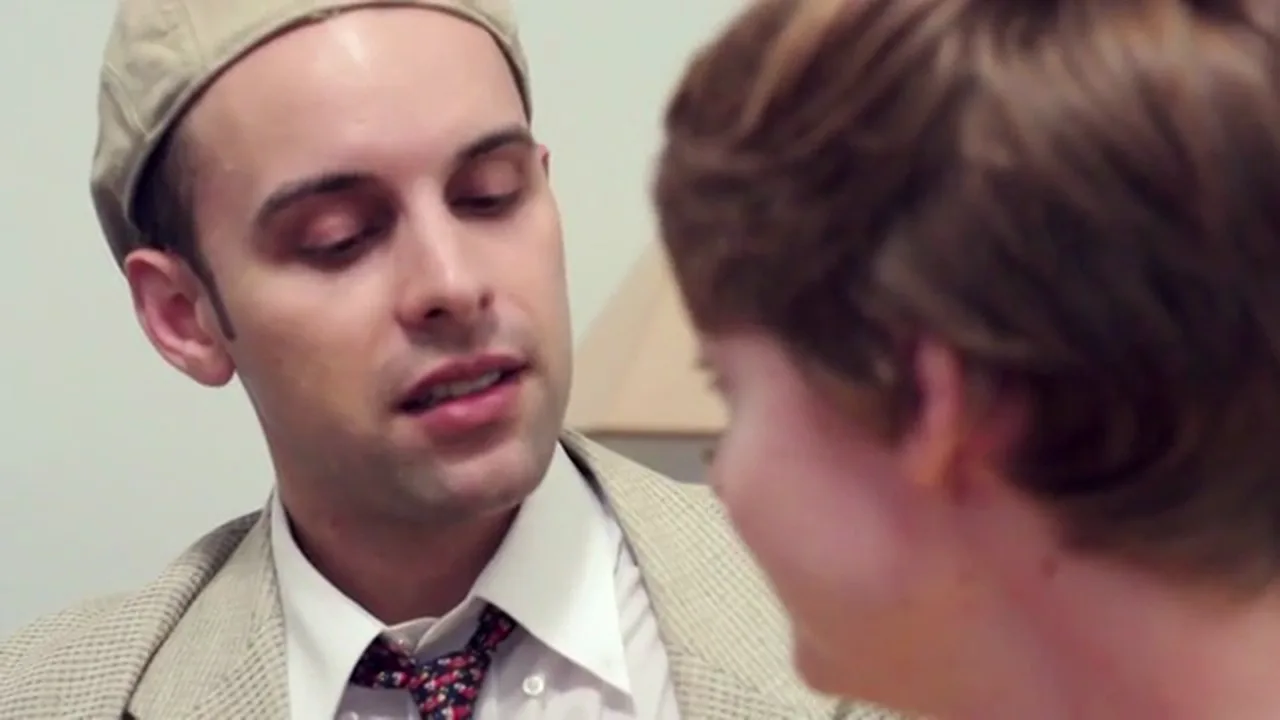
An over-the-shoulder shot has the camera "placed above the back of the shoulder and head of a subject," looking at the other person (Wikipedia, "Over-the-shoulder shot"). It is objective in Mascelli's terms but anchored to one character's side of the conversation.
Over-the-shoulder
Her head and shoulder fill the right of the frame as the camera looks past her at him.Still from A Sad State of Affairs (2009), M.A. Lanoue / Squire Films, CC BY-SA 3.0 US.
Dirty single, and how it differs from an OTS
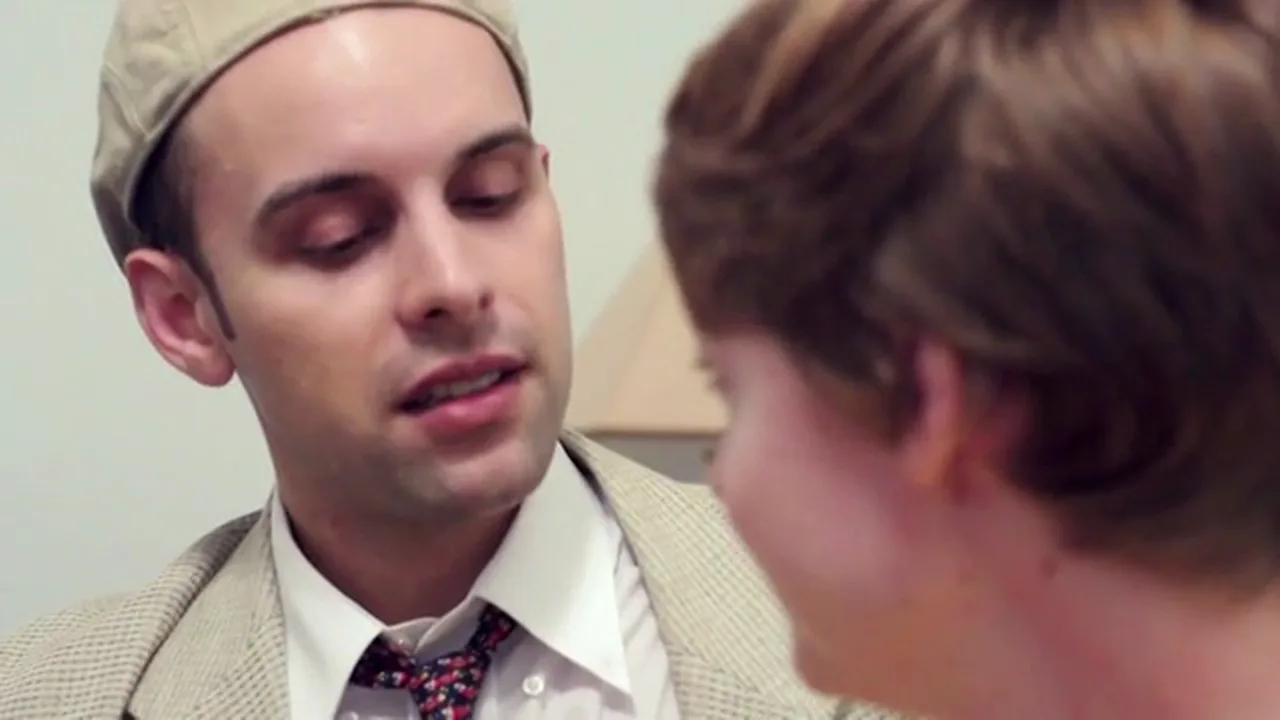
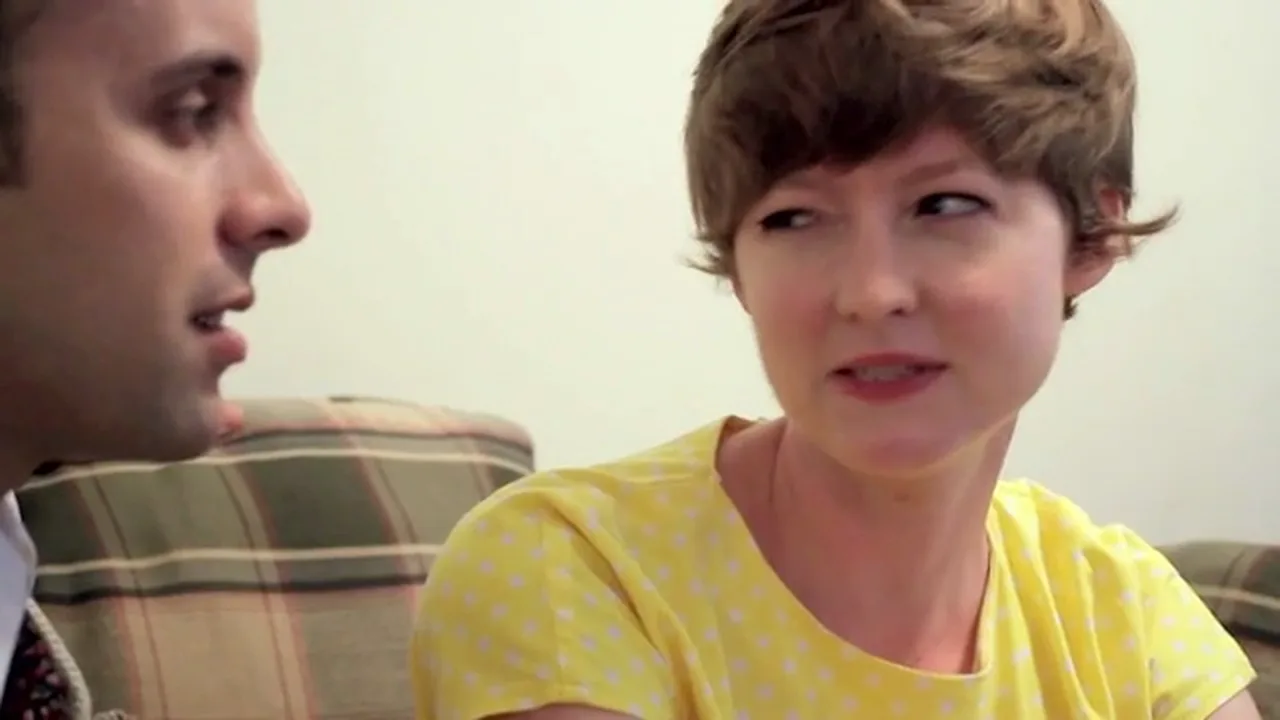
A dirty single is "a close-up or medium shot of one character that includes a partial view of another character, usually a shoulder, head, or blurred profile, in the foreground" (HowToFilmSchool). It differs from an OTS in how much of the second person shows and what the shot is about:
Dirty single
Only a blurred edge of the other character intrudes at the left. The shot is about her.Still from A Sad State of Affairs (2009), M.A. Lanoue / Squire Films, CC BY-SA 3.0 US.
In an OTS, the near character's shoulder and head are a real part of the composition, and the shot shows the relationship between the two people.
In a dirty single, the foreground sliver is there only to keep the other person present. The shot is still about one face.
Reverse angle
A reverse angle shows the other side of an exchange: one character is "shown looking at another character (often off-screen), and then the other character is shown looking back" (Wikipedia, "Shot/reverse shot," citing Bordwell and Thompson's Film Art). The camera has to stay on one side of the line between the actors, or the two appear to face the same way.
Shot
Reverse
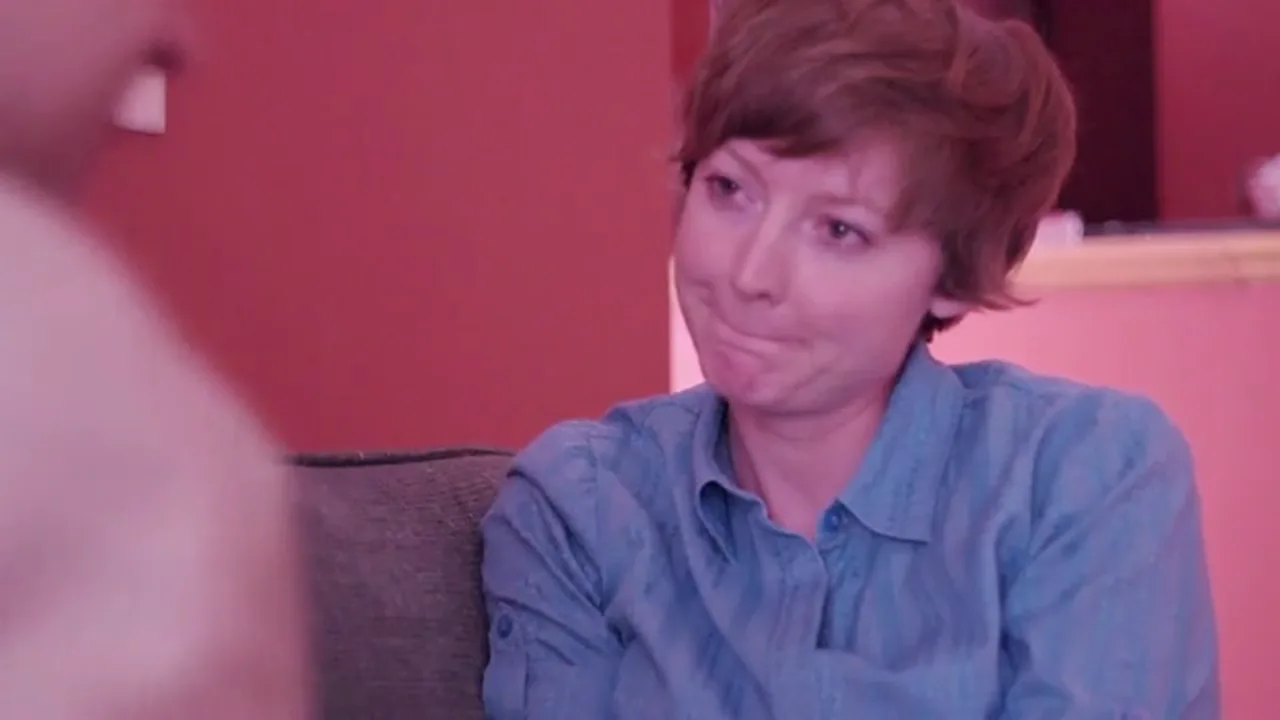
Two consecutive shots from opposite sides of the same conversation: first over her shoulder onto him, then over his shoulder onto her.Still from A Sad State of Affairs (2009), M.A. Lanoue / Squire Films, CC BY-SA 3.0 US.
Overhead plan: OTS and reverse angles stay on one side of the axis between the two characters.
From the air
Aerial shot
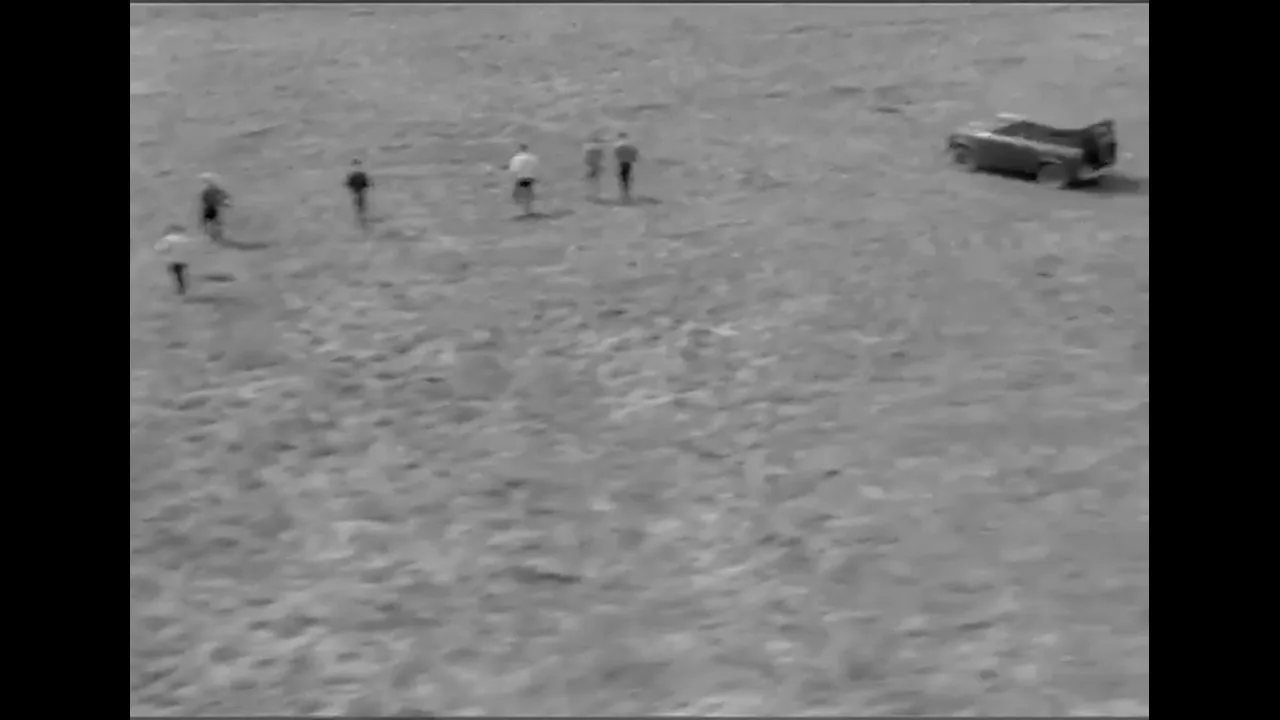
"Aerial shots use helicopters or drones to get shots from directly above the subject" (Video Production Handbook). In general usage, Wikipedia notes, "aerial view can refer to any view from a great height, even at a wide angle."
Aerial shot
A high, moving view over a line of men crossing a field.Night of the Living Dead (1968), George A. Romero. Public domain (US).
Aerial shot
Shot from another aircraft above, the camera looks almost straight down on a biplane as it climbs toward the lens over a forest.Wings (1927), William A. Wellman. Public domain (US).
Jay Holben's April 2024 American Cinematographer column says drones now handle "a wide range of shots, including some formerly accomplished with helicopters and cranes."
In a prompt: Google's guide: "Aerial shot or drone shot: a shot taken from a high altitude, typically using an aircraft or drone, often involving smooth, flying movements."
A summary table
Term
What is set
Typical reading (source)
Eye level / neutral
Lens at eye height, level
"Equal" to subject (Video Production Handbook); "little to no psychological effect" (Wikipedia)
High angle
Looking down
"Small and inferior" (LMU)
Low angle / hero
Looking up
"Large and powerful" (LMU)
Bird's-eye / overhead
Looking straight down
"God-like" (LMU); "map-like" (Google)
Worm's-eye
Looking straight up from the ground
"Height and grandeur" (Google)
Dutch / canted
Roll around the lens axis
"Things are not 'okay'" (LMU)
Shoulder / hip / knee / ground level
Camera height only
Luma's definitions
Profile / three-quarter
Horizontal angle to subject
Contour (profile); about 45° (three-quarter), per Luma
POV / subjective
Whose eyes
Viewer as character (Mascelli)
How we compiled this
Angle definitions come from the Video Production Handbook (LibreTexts, section 8.2) and LMU's No-Nonsense Filmmaking (2025), checked against Wikipedia's article on each angle; Mascelli is quoted from the passage reproduced on Wikipedia, as we could not open the book. Camera-height, profile and three-quarter definitions are Luma's, and prompt wording is from Google's video generation prompt guide (updated 17 November 2026). We checked everything on 18 November 2026; Vinc makes an AI film studio.
Aspect Ratios in Film Explained: 1.33 to 2.39 and 9:16, With the History and Delivery Specs
Aspect ratios in film are width divided by height. See where 1.375, 1.85, 2.39, 16:9, IMAX and 9:16 came from, and the containers cinemas and Netflix expect.